What You Need To Know About Kingston - Private Microsuction Ear Wax Removal In Kingston-upon-Thames KT6
This Content Refreshed on Fri, 7 Aug 2026 05:42
Private Ear Wax Removal in Kingston-Upon-Thames, What Visitors Should Know
Private microsuction in Kingston-upon-Thames KT6 is a clinical ear wax removal service for people who want faster assessment, clearer hearing, and a safer alternative to irrigation when wax is impacted. The process uses gentle suction under direct vision, usually with magnification, so the practitioner can see the ear canal and work precisely. For many adults, the main appeal is speed, because blocked ears can affect hearing, balance, concentration, and even sleep. A good clinic should begin with a brief history, look at the ear canal and eardrum, and decide whether microsuction is suitable for your symptoms and medical background. In British English usage, you may also hear the terms earwax removal, blocked ear treatment, and aural care, but the goal is the same, removing wax carefully and safely. If you are planning a visit from Kingston station or nearby KT6 streets, it helps to understand the likely appointment flow, parking, access, and aftercare before you attend.
Why People Choose Private Treatment
People often choose a private appointment when they need prompt relief, use hearing aids, or have had trouble with syringing in the past. Microsuction is commonly preferred for recurrent impaction, narrow ear canals, and cases where the clinician needs full visual control. It can also suit people who want a clear answer quickly, rather than waiting for multiple NHS steps. The most important thing is clinical suitability, because ear pain, discharge, or sudden hearing loss may need medical review before any wax removal starts.
What Microsuction Actually Involves During the Appointment
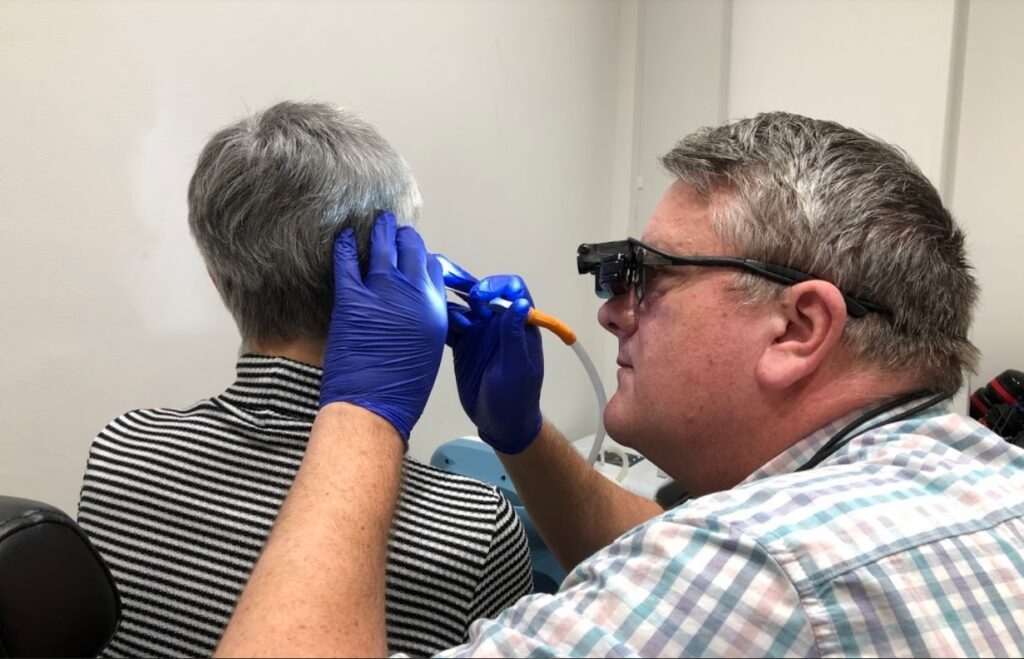
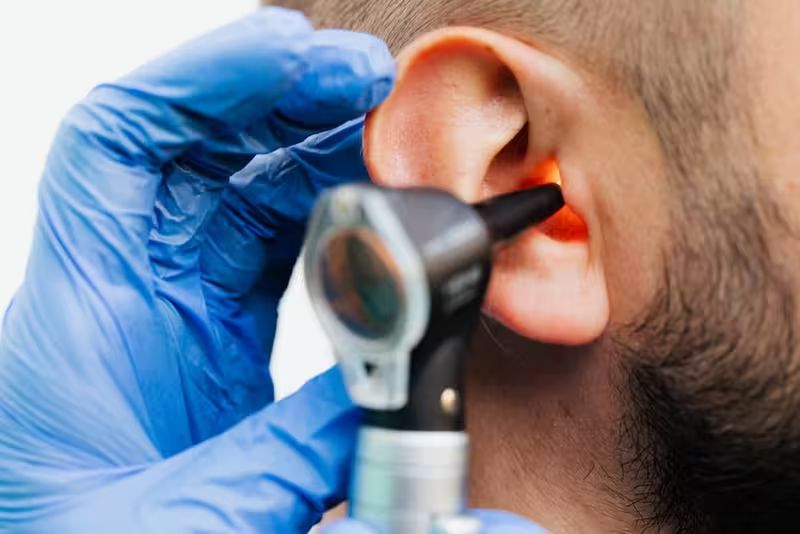
Microsuction is a straightforward but careful procedure. After a short discussion about your symptoms, the clinician examines the ear with an otoscope or microscope, checks whether the eardrum appears healthy, and confirms that wax removal is appropriate. A small suction probe is then used to lift wax away from the ear canal while the clinician watches the area directly. This is different from irrigation, because the wax is not softened and flushed out with water. Many patients find the procedure comfortable, though some notice brief noise from the suction or a tickling sensation. In a private Kingston clinic, appointments are usually designed to be efficient, but not rushed. The clinician should explain what they are doing, pause if you feel discomfort, and adapt the approach if the wax is hard, sticky, or close to the eardrum. After removal, you should be told what was found, whether both ears were treated, and whether any follow-up is needed. If your symptoms are not caused by wax alone, the clinician should advise the next sensible step.
Typical Steps You Can Expect
- The clinician takes a short history about hearing changes, blocked sensations, tinnitus, infections, pain, previous perforations, and any past ear surgery.
- The ear canal is inspected under magnification so the practitioner can judge whether microsuction is safe and likely to be effective for your case.
- Wax is removed with a fine suction tube, often in small stages, to reduce irritation and keep the procedure controlled.
- The clinician checks the canal again after removal, then explains the outcome and any aftercare you should follow at home.
- If anything looks unusual, you may be advised to see your GP, audiologist, or an ENT specialist for further assessment.
Signs That Ear Wax Removal May Help
Ear wax is normal, but it can become troublesome when it builds up and blocks the ear canal. Common symptoms include reduced hearing, a feeling of fullness, mild tinnitus, muffled sound, itchiness, and occasional dizziness. Some people also notice that hearing aids whistle more often or stop fitting comfortably. In Kingston, private microsuction is often used when symptoms have not settled with simple self-care or when a clinician has already confirmed that wax is the likely cause. It is important not to assume every blocked ear is wax, because infection, fluid behind the eardrum, skin conditions, and sudden sensorineural hearing loss can all create similar effects. A proper assessment matters more than speed alone. If you are unsure, a professional ear check can distinguish impacted wax from other causes of hearing change. That is especially useful for older adults, swimmers, hearing aid wearers, and anyone who has had repeated blockage before.
Common Reasons People Book
- Persistent blocked or muffled hearing that does not improve after careful home management or wax-softening drops.
- Feedback from hearing aids, which can happen when wax prevents the devices from sitting properly in the ear canal.
- Preparation for an audiology test, because wax can distort hearing results and make an assessment unreliable.
- Repeated wax build-up after previous removal, especially where ear canals are narrow or produce more wax than usual.
- Discomfort from a sensation of pressure, itchiness, or intermittent popping that seems linked to earwax blockage.
Who Is Suitable for Microsuction and Who Needs Caution
Microsuction is suitable for many adults, but it is not the right option for every ear. A responsible practitioner will consider your ear health history, recent symptoms, and any known risks before starting. If you have had ear surgery, a perforated eardrum, chronic infection, significant pain, or discharge from the ear, the clinician may decide to defer treatment or arrange medical review first. This cautious approach is part of good practice, not a sign that the service is difficult. It protects you from avoidable harm and helps the team choose the safest method. Private clinics in Kingston should ask about previous grommets, mastoid surgery, dizziness, and any difficulty tolerating ear work. They should also consider whether a hearing aid, anticoagulant medicine, or skin condition inside the ear changes the plan. If you are pregnant, have fragile skin, or are anxious about loud sounds, let the clinician know, because they can often adjust the session to suit you better. The best outcome comes from honest disclosure and a calm, thorough assessment.
When a Clinic May Pause Treatment
It is sensible to pause or seek medical advice if there is sudden hearing loss, ongoing ear pain, active infection, blood, or recent trauma to the ear. These signs can point to a problem that needs treatment before wax removal is attempted. If the ear canal is extremely swollen or blocked with debris, the practitioner may also recommend a different pathway. A careful decision at the start is safer than forcing the procedure.
Useful Pre-Appointment Note
Bring a list of medicines, any previous ENT letters, and details of past ear problems, because these facts help the clinician make a more accurate and safer judgment.
Driving Directions to Hearing First Kingston Surbiton
- Clear earwax Surbiton to Hearing First Kingston Surbiton: approximately 2.3 miles and 11 minutes by car. The route typically begins: Head north-east on St Mark's Hill/B3370 towards Adelaide Rd; then Continue onto Lamberts Rd; then Lamberts Rd turns slightly left and becomes Kingsley Ter/Villiers Ave Continue to follow Villiers Ave. Open this route in Google Maps.
- Esher Green Surgery to Hearing First Kingston Surbiton: approximately 7.4 miles and 19 minutes by car. The route typically begins: Head east on Esher Green Dr towards More Ln; then Turn right onto More Ln; then Continue onto Esher Grn. Open this route in Google Maps.
- LITTLETON SURGERY to Hearing First Kingston Surbiton: approximately 7.0 miles and 18 minutes by car. The route typically begins: Head west on Esher Park Ave towards Claremont Ln/A244; then Turn right onto Claremont Ln/A244; then Turn right onto High St/A307 Continue to follow A307. Open this route in Google Maps.
- Tolworth Hospital to Hearing First Kingston Surbiton: approximately 3.3 miles and 13 minutes by car. The route typically begins: Head south; then Turn right towards Red Lion Rd; then Turn right onto Red Lion Rd. Open this route in Google Maps.
- Surbiton Library to Hearing First Kingston Surbiton: approximately 2.3 miles and 11 minutes by car. The route typically begins: Head north towards Berrylands Rd; then Turn right onto Berrylands Rd; then Turn left onto King Charles Rd.. Open this route in Google Maps.
Distances, indicative journey times and route links are provided by Google Maps. Check live conditions before travelling.
Travel, Station Access, and Getting to a Kingston Clinic
For people travelling to private microsuction in Kingston-upon-Thames, the location is often a major advantage. A clinic near Kingston station or central KT6 streets is easier to reach for those arriving by train, bus, taxi, or on foot. Short walking distances can make the whole appointment less stressful, especially if you already feel unwell from blocked ears or balance symptoms. Good travel planning matters because ear care appointments are often brief, and arriving late can reduce the time available for examination and treatment. If you drive, check the route in advance, look up live traffic, and allow a little extra time for parking. If you come by public transport, it can be useful to know the nearest stop, stair access, and the walk from the station to the clinic entrance. Comfort and timing matter, because a rushed arrival can make anyone feel flustered before a clinical procedure. Knowing the route also helps if you are travelling with a hearing aid user, a carer, or someone with reduced mobility.
Planning the Journey
- Check train or bus times before you set out, because delays around Kingston town centre can affect short appointments more than longer ones.
- Leave enough time to find the building entrance, especially if you are unfamiliar with St James' Road or nearby one-way systems.
- If you rely on sat nav, use the full clinic postcode and confirm the destination before travelling, as ear care venues can share similar names.
- Allow a small buffer for parking, payment, and walking from the vehicle, particularly at busy times near the station.
- If you feel unsteady or anxious, ask a friend or relative to accompany you so you can arrive more calmly and safely.
Parking, Blue Badge Use, and Arrival Considerations
Car Parks Near Hearing First Kingston Surbiton
- Norbiton Station Car Park, approximately 0.5 miles from Hearing First Kingston Surbiton. View on Google Maps.
- Kingston School of Art, approximately 1.0 mile from Hearing First Kingston Surbiton. View on Google Maps.
- Waitrose car park, approximately 0.9 miles from Hearing First Kingston Surbiton. View on Google Maps.
Parking information and place links are provided by Google Maps. Check restrictions and charges locally.
Parking is often one of the practical details that decides how smooth a visit feels. In Kingston, people commonly look for on-street pay-by-phone bays, short-stay spaces, or nearby off-street car parks. If your appointment is for microsuction ear wax removal, it makes sense to check parking rules before you leave home, because local restrictions can change by street and by time of day. Blue badge holders should still read the signs carefully, since the badge does not remove every restriction and each bay can have its own conditions. If you need level access, transfer support, or a little extra time to get in and out of the vehicle, say so when booking or before arrival. A clinic team can often advise where to stop most conveniently and what entrance is easiest to use. The best arrival experience is one where you can park legally, walk in comfortably, and settle before the assessment begins. Simple planning can reduce stress and leave you better prepared for the appointment itself.
Practical Parking Guidance
- Read the nearby signs carefully, because even helpful pay-by-phone spaces may have time limits, permit rules, or loading restrictions that affect your stay.
- Keep your payment confirmation or parking session details on your phone, especially if you expect to be inside the building for longer than planned.
- Blue badge holders should display the badge correctly and check whether the chosen space allows the type of stop they need for the visit.
- If the clinic has a ground-floor entrance, ask whether there is a preferred drop-off point for people with limited mobility or balance concerns.
- Consider travelling a little earlier during peak periods, because Kingston town centre traffic and parking demand can be heavier around shopping and commuting times.
Accessibility and the Ground-Floor Clinic Layout
Published Accessibility Features
- Wheelchair-accessible entrance
- Wheelchair-accessible parking
- Wheelchair-accessible toilet
- Wheelchair-accessible seating
Accessibility details are provided by Google Maps. Contact the location to confirm individual requirements.
Accessibility is a major part of a good private ear care experience. For a microsuction appointment, people may arrive with mobility aids, walking sticks, wheelchairs, or hearing difficulties that make clear, simple access important. A ground-floor setting can make the visit easier, especially where the treatment room, waiting area, and toilet facilities are arranged on one level. Even so, accessibility should never be assumed. A small step, a narrow doorway, or limited turning space can still matter, depending on the equipment you use. If you need wheelchair access, support transferring from a vehicle, or a quiet waiting space, it is sensible to confirm those details before you travel. Good clinics will welcome these questions and explain what is available. That helps protect dignity, reduces uncertainty, and makes the ear examination less stressful. When a clinic takes accessibility seriously, the whole appointment usually feels more organised and more respectful. In ear care, that can make a real difference to comfort and confidence.
What to Confirm Before You Travel
Ask whether the entrance is step-free, whether the treatment chair is easy to transfer into, and whether a companion can remain with you if needed. If you use a wheelchair or mobility scooter, confirm doorway width and turning space. If you are deaf or hard of hearing, request clear written instructions as well as verbal guidance. These small checks can prevent avoidable problems on the day.
Accessibility Tip
If you need a little more time for transfer or settling in, let the clinic know in advance, because an extra few minutes can make the appointment much calmer and safer.
How to Prepare Before Your Microsuction Appointment
Good preparation can make microsuction ear wax removal more efficient and sometimes more comfortable. If the clinic recommends wax-softening drops, use them exactly as instructed and only for the period suggested. This can help loosen stubborn wax and improve the chance of completing treatment in one visit. Avoid cotton buds, hairpins, or other objects in the ear, because these can push wax deeper and irritate the canal. It is also wise to think about any ear history you may have, including grommets, perforation, recurring infection, tinnitus, balance issues, or previous microsuction. That information helps the practitioner choose the safest technique. If you wear hearing aids, bring them with you and be ready to remove them before the assessment if asked. Many people also find it helpful to write down symptoms beforehand, because once they are in the clinic they may forget details. A small amount of planning usually leads to a better, faster ear health consultation and clearer advice at the end.
Simple Preparation Checklist
- Use only any wax-softening drops that have been advised, and follow the timing carefully so the wax is ready for review.
- Avoid putting anything into the ear canal, because even a gentle attempt to clean it can make wax harder to remove.
- Bring details of previous ear surgery, perforations, infections, or hearing tests, because they can affect suitability for treatment.
- Pack hearing aids, charger, and any related accessories if you use them daily and need to check fit after the appointment.
- Wear comfortable clothing and plan a little time after the appointment in case you want to sit quietly before travelling home.
What Happens After Wax Removal and How to Look After Your Ears
After microsuction, most people can return to normal activities quite quickly. The ear may feel lighter, clearer, or a little unusual for a short while, especially if the wax was hard or the canal was slightly irritated. Your clinician should give aftercare advice tailored to your ear health and any findings during the appointment. This may include keeping water out of the ear for a short period, watching for signs of infection, and returning if blocked hearing comes back. If you wear hearing aids, the clinician may tell you when it is safe to reinsert them. It is also common to discuss prevention, because some people are prone to repeated wax build-up and may benefit from regular check-ups or simple maintenance. If the clinician found anything other than wax, you may be advised to see your GP or an audiologist for further assessment. Clear aftercare matters because it protects the result of the procedure and helps you recognise when a change needs follow-up rather than waiting it out.
Red Flags After Treatment
Contact the clinic or your GP if you develop severe pain, ongoing discharge, fever, sudden hearing loss, or spinning dizziness after the appointment. These are not typical after a routine wax removal visit and should be reviewed promptly. Mild temporary sensitivity can happen, but worsening symptoms deserve attention.
Short Recovery Tip
If the ear feels a little odd after treatment, give it a short rest before you rush back to loud environments, swimming, or anything that might irritate the canal.
Why Direct-Vision Removal Is Often Preferred Over Syringing
Many people in Kingston choose microsuction because it gives the practitioner direct visual control of the ear canal. This matters when the wax is hard, the canal is narrow, or the person has a history of ear surgery or perforation. Compared with syringing, which uses water to flush out wax, microsuction can be more precise and less dependent on softening the blockage first. That does not make it suitable for everyone, but it is one reason private ear clinics recommend it so often. The visual approach also helps the clinician notice problems that might make treatment unsafe, such as infection, an inflamed canal, or an abnormal eardrum. For patients, that can be reassuring because the method is careful rather than forceful. It may also reduce the chance of water-related discomfort, which some people dislike. If you have had a poor experience with irrigation in the past, direct-vision ear wax removal may feel much more controlled and predictable. The best method is always the one matched to your ear and your history.
Benefits of Direct Vision
- The clinician can see the ear canal throughout the procedure, which helps avoid pushing wax deeper or missing a complication.
- Microsuction is often better suited to people with perforations, grommets, or previous surgery, although clinical judgment still matters.
- There is no water flush, so some patients find the method cleaner and more comfortable than irrigation or syringing.
- The practitioner can stop and reassess at any time, which supports a safer and more responsive appointment.
- If the wax is not the cause of your symptoms, the visual assessment may reveal that you need medical follow-up instead.
Clinical Standards, Training, and What a Good Provider Should Explain
Research Catalogue Results for Ear Wax Removal
- The auricular cough reflex: lateralization, prevalence, procedural determinants, and the role of examiner handedness. - van de Loo J, Mayer M, Sharaf K, Eckel H, Jansen L, Klussmann JP, Luers JC., 2026.
- High-definition otoscopic device for humanitarian mission: how i do it. - Lechien JR, Maniaci A, Kipsang MJ, Kibor M, Vaira LA., 2025.
- Use of Castor Oil in Dermatology: A Narrative Review. - Girdler K, Cabatu A, Olds H, Potts GA., 2026.
Source: Europe PMC. These are bibliographic matches, not personalised medical advice or an endorsement of a treatment.
When choosing private microsuction in Kingston-upon-Thames, clinical standards matter as much as convenience. A good provider should be able to explain who will perform the procedure, what training they have, and how they keep the treatment environment clean and safe. They should use suitable infection control measures, sterilised or single-use instruments where appropriate, and clear consent procedures. You should feel able to ask practical questions about suction equipment, procedure limits, and what happens if the clinician sees something unexpected. E-E-A-T matters in healthcare content, and it matters in the clinic too, because patients need evidence that the service is competent, transparent, and accountable. Reputable ear care providers also keep proper records and have pathways for referral if a problem is found. If you wear hearing aids or have complex ear history, the clinician should explain any additional care needed. Good practice is calm, specific, and easy to understand. It should never feel vague or rushed, especially when the ear canal and eardrum are being examined.
Questions Worth Asking
- Who will carry out the microsuction, and what specific ear care training or clinical background do they have?
- What happens if the clinician finds a perforation, infection, or another condition that means wax removal should be postponed?
- How does the clinic manage infection control, instrument cleaning, and the use of disposable items during treatment?
- Will I receive written aftercare advice or a summary of findings that I can share with my GP if needed?
- How does the clinic handle follow-up if my symptoms continue after the wax has been removed?
The clinic is a short walk from Kingston station, with on‑street pay‑by‑phone bays directly outside. Our Kingston microsuction service operates from Therapy Spaces on St James’ Road on the ground floor, so access from the street is straightforward for most visitors.
Ear Wax Removal Kingston South West London Map, Location and Directions
You can get directions to our Microsuction Kingston Location here. Just put in your location in the specified area and Google Maps should lead you to the clinic.
%%JSLNAPSECTION_1_5DE09364AE2E5175%%
Probably the best ear wax removal clinic in Kingston – don’t just take our word for it – here are some reviews from our many happy clients:
Essential Details About Private Microsuction in Kingston Kt6
What the Service Involves
This section outlines what typically happens at a private microsuction visit in Kingston, emphasising practical steps and safety. Microsuction is performed by a trained practitioner who removes obstructive ear wax using a fine suction instrument while viewing the ear on a microscope or endoscope. In a private setting you can expect an initial otoscopic inspection, symptom review, and a discussion of any history such as perforations, ear infections, or prior ear operations. Clinics normally adhere to strict infection control, use single‑use specula where appropriate, and obtain informed consent before proceeding. Appointments are usually short and many people notice almost immediate relief from blocked sensations, clearer hearing, and less tinnitus when wax was the cause. The use of magnification and suction helps make the procedure both efficient and safe for most patients, although clinicians will always discuss any contraindications and alternative options.
Who Might Benefit from Microsuction
Microsuction is suited to those with troublesome impacted wax, reduced hearing caused by blockage, or people who have tried irrigation without success. It is often the preferred method when an eardrum is perforated, after ear surgery, or where irrigation would be ill advised. For recurrent problems, private clinics can set up maintenance plans, offer advice on wax‑softening drops, and liaise with your GP if a medical opinion is needed. Be open about your medical history and current ear symptoms so the clinician can adapt the approach to your individual ear health and any rehabilitation needs.
Quick Practical Tip
Bring any recent GP notes or audiology reports, including hearing test results, so the clinician has a complete picture and can make the safest decision about removal and follow up.
Clinical Caution
If you develop sudden hearing loss, severe ear pain, or active discharge, seek medical assessment before arranging microsuction, because these symptoms may indicate infection or other conditions that need treatment rather than routine wax removal.
Private Microsuction Assessment and Suitability
A private microsuction consultation in Kingston is designed to begin with an informed ear health assessment, rather than proceeding straight to wax removal. The practitioner reviews symptoms and relevant history, then examines the ear canal and eardrum using otoscopic magnification. Sharing details of previous perforations, infections, ear operations, tinnitus or hearing changes helps the clinician decide whether microsuction is an appropriate option for you.
- Microsuction removes obstructive wax with a narrow suction instrument under direct visual guidance.
- The clinician can explain consent, infection-control measures and any reasons to defer treatment before starting.
- Bring recent GP correspondence or audiology results where available, particularly if you have an established hearing condition.
- Seek medical assessment first for sudden hearing loss, severe pain or ear discharge, as these symptoms may need treatment beyond routine ear wax removal.
How to Find the Clinic and Parking Advice
Practical Parking Options
When planning your trip, leave time to find suitable parking close to the clinic. There are on‑street metered bays and pay‑by‑phone options close to the entrance, and an off‑street pay‑and‑display car park a short walk away. Check local signage for accepted payment methods such as apps, cards or coins, and keep any confirmation receipt in case parking attendants are active. Kingston town centre parking restrictions change during busy shopping periods, so aim to arrive a little earlier during peak times to secure a space.
- If you plan to use a taxi or ride app drop‑off, ask the driver to stop near the clinic entrance to make boarding and alighting safer, particularly if you expect any balance or hearing effects after treatment.
- The off‑street pay and display car park a few minutes’ walk away is useful for longer stays and when you expect extra time for paperwork or removal of hearing devices before your appointment.
- If you cycle or use public transport, there are nearby bus stops and cycle stands; this can be a stress‑free option at busy times when parking is limited.
- On‑street metered bays are often the most convenient but have strict time limits, so read signage carefully to avoid fines for overstaying.
- Pay‑by‑phone payments reduce the need for coins, but make sure your vehicle registration is entered correctly and you keep the transaction confirmation for the entire duration you will be away from the car.
Booking Your Appointment
Because demand is high, ear wax removal is available by appointment only. You can make an ear microsuction booking via this link, or use the button below to go straight to the booking page:
How to Book
Given the popularity of microsuction, it is essential to book ahead. You can conveniently book your microsuction appointment here to secure a prompt slot and avoid delays.
It is sensible to confirm your preferred date early, particularly during busy periods, so you can access care quickly and restore comfortable hearing without unnecessary waiting.
Planning Your Kingston Microsuction Booking
Microsuction appointments are offered on a pre-booked basis, making advance planning especially useful when demand is high. The online booking route gives prospective patients a straightforward way to request an appointment at the Kingston service. Booking ahead can help you choose a time that fits around work, caring responsibilities or travel, while avoiding unnecessary delays when blocked ears are affecting daily comfort.
Before confirming a slot, consider noting your main symptoms and any important ear history. This can make the initial discussion more efficient and helps ensure that the appointment is suitable for your needs. If you have reduced mobility, use hearing aids or need someone to accompany you, it is sensible to raise this when arranging your visit so you can clarify practical requirements in advance.
Blue Badge Parking and Disabled Driver Guidance
Blue badge holders should be aware of the local rules that often allow stopping on certain restricted lines for a limited time, usually up to three hours, provided the badge is displayed correctly and local conditions are met. While the blue badge scheme helps with short‑notice access, it does not remove all restrictions, so always check nearby council signage for any recent changes. The clinic suggests calling ahead if you intend to use a blue badge space, so staff can advise on the nearest permitted bays and arrange assistance on arrival if needed.
- Plan to arrive a little earlier than your appointment so you can find level parking close to the entrance, which is helpful if you have mobility equipment or require assistance transferring from a vehicle.
- Confirm your blue badge is valid and clearly displayed, and follow any additional parking instructions on local signs to avoid penalties, because some bays impose further conditions.
- If you will park on restricted lines under blue badge rules, ensure you do not cause an obstruction and that you observe the maximum permitted stay, as enforcement officers may patrol frequently.
- Consider arranging transport with a friend or a community mobility service if you are unsure about blue badge rules, this can reduce stress and help you arrive on time for the appointment.
- Contact the clinic reception ahead of your visit to request help getting from your vehicle to the waiting area, staff may be able to meet you at the door or provide seating for transfer from a wheelchair or mobility aid.
Accessibility and Disabled Access
The clinic is on the ground floor, with a small four‑inch step up to the front door and level access beyond that, which makes most areas straightforward to use for clients with limited mobility.
Accessible Arrival Information
The clinic is located on the ground floor, with level access after a small step at the entrance. This layout may make the visit more manageable for many people with limited mobility, although individual requirements can vary. Published location information also notes wheelchair-accessible entrance, parking, toilet and seating facilities, but visitors should confirm the arrangements that matter most to them before travelling.
If you use a wheelchair, walking aid or require assistance from a carer, contact the location ahead of your appointment to discuss your needs. Confirming access details in advance can help you plan a more comfortable arrival and allow the team to advise on the most suitable approach. Clear communication is particularly valuable where a step, transfer needs or accessible parking may affect your visit.
Entrance and Accessibility Details for the Clinic
Access Summary
The treatment area is on a single level once you pass the entrance threshold, and the space is arranged to be accessible for the majority of visitors. A small four‑inch step at the doorway may be a minor hurdle for some wheelchair users and those with large mobility aids. If you use a wheelchair or have restricted mobility, tell the clinic when booking so staff can prepare and offer assistance on arrival to make access easier and maintain privacy and dignity during transfer.
Arrival Procedure
On arrival, staff will typically welcome you, check your details, and provide seating near the treatment room where appropriate. The waiting area is set up to accommodate wheelchairs and mobility aids, and clinicians will support safe transfer to the treatment chair. If you need help stepping over the small threshold, staff can escort you into the building and provide any required assistance. The clinic also keeps basic mobility aids and spare seating available for those who request them.
Pre‑Visit Suggestion
If you expect to need help, phone ahead to describe your mobility needs, noting whether you use a wheelchair, walking frame, or will be accompanied by a carer. This allows the clinic to schedule a slightly longer appointment and be ready to assist on the day.
Short Caution
If you use a powered wheelchair that requires a ramp or extra width, confirm the dimensions and access arrangements in advance, because some older buildings have narrower thresholds that need additional planning.
Parking Options Close to the Clinic
There is on‑street pay‑by‑phone or metered parking immediately outside the clinic and an off‑street pay and display car park about a two minute walk away.
What Happens During a Microsuction Appointment
Step‑By‑Step Appointment Flow
Appointments usually start with a short clinical history and a visual inspection of the ear using an otoscope or video endoscope. The clinician looks for signs that microsuction is appropriate, such as an intact eardrum and an ear canal anatomy that allows safe removal. If there is active infection, discharge, or recent concerns about the tympanic membrane, the practitioner may postpone microsuction and recommend medical treatment instead. Where suitable, the clinician will use magnification and a fine suction probe to remove wax under direct vision. Many patients notice immediate improvement with little discomfort. At the end of the session you will be given aftercare advice, for example to avoid water entering the ear for a short time and to watch for signs of infection that should be reported to the clinic or your GP.
- Your clinician will explain any aftercare required at the end of the appointment, including when to seek further help for persistent blockage, new pain, or unusual symptoms that might indicate a complication.
- The initial assessment includes detailed questions about recent ear pain, discharge, hearing changes, and any history of perforation or ear surgery to determine whether microsuction is safe and appropriate.
- If wax is very hard or densely packed, the practitioner may advise a period of pre‑treatment with wax‑softening drops to increase the chance of removing the wax in a single visit.
- The procedure is done under direct vision, which reduces the risk of driving wax deeper into the canal compared with irrigation, making it suitable for people who cannot safely undergo syringing.
- Your clinician will record the treatment in your clinical notes and, if needed, propose follow‑up visits or a maintenance plan to prevent repeat impaction and associated hearing loss.
Microsuction Appointment Process and Aftercare
Your appointment generally starts with questions about ear pain, discharge, hearing changes and any past perforation or ear surgery. The clinician then inspects the ear under magnification to establish whether ear wax removal can be performed safely. If there are signs of infection, concerns about the eardrum or other clinical reasons not to continue, they may recommend postponing microsuction and seeking appropriate medical care instead.
- Attend the ear assessment and discuss symptoms, relevant medical history and hearing aid use.
- Allow the practitioner to inspect the ear canal and determine whether microsuction is suitable.
- If appropriate, wax is removed with a fine suction probe while the clinician works under direct vision.
- Follow the individual aftercare advice, including guidance about water exposure, persistent blockage, pain or unusual symptoms.
Why Patients Often Prefer Microsuction to Syringing
Until recently, many GP surgeries provided ear syringing, but access has reduced in some parts of Southwest London. Syringing carries a higher risk of pushing wax deeper, potentially causing infection, tinnitus, or temporary hearing reduction, which has led many people to seek microsuction instead. Microsuction allows direct visual removal and is perceived as safer and more controlled. Rising demand means NHS microsuction clinics can have long waits, sometimes several months, so private clinics are often chosen for quicker access and shorter waiting times.
If you prefer not to wait for NHS services, private microsuction offers faster appointments. To check availability and potentially be seen within days, visit our booking page and see how quickly you could have treatment.
Fascinating Facts About Kingston
- Coronation Stone Legacy
Kingston-upon-Thames’s ancient Coronation Stone, displayed outside the Guildhall, is where Saxon kings like Æthelstan were crowned in the 10th century. Local legend claims the stone “groans” on the anniversaries of royal deaths—a myth tested during Queen Elizabeth II’s 2022 memorial. - Oldest Surviving Bridge
is one of Britain’s oldest surviving river crossings. Its name comes from the “clattering” hooves of medieval horses, a 2021 restoration revealed Tudor-era graffiti of a griffin carved into the stone., Kingston-upon-Thames’s Clattern Bridge, and built in the 12th century - Medieval Mint Town
Kingston-upon-Thames was a royal mint under Alfred the Great. In 2020, a metal detectorist found a rare 9th-century silver penny near the Thames, stamped with “CYNINGES TUN”—Old English for “King’s Town.” - Ear Wax Removal in Kingston
Ear wax removal is available from the experts at Hearing First Kingston on Mondays in Therapy Spaces on St James’ Road, just a couple of minutes’ walk from Surbiton station in KT6. Click here to book now. - Ancient Market Rights
Kingston-upon-Thames’s market charter dates to 1242, granted by Henry III. The modern market still thrives near All Saints’ Church, though today’s stalls sell artisan cheese instead of medieval wool. A plaque marks the original tollbooth site. - John Galsworthy’s Hometown
The Nobel Prize-winning author of *The Forsyte Saga* was born in Kingston-upon-Thames in 1867. His childhood home on Coombe Road is now a dentist’s office, but fans still leave typewriter-shaped tributes at his Guildhall statue. - Eadweard Muybridge’s Pioneering Work
The Victorian photographer and motion-study pioneer lived in Kingston-upon-Thames. His 1878 “horse in motion” experiments, which led to film technology, were partly funded by the town council. A mural on Fife Road celebrates his legacy. - The Bentall Centre’s Retail Empire
This shopping hub, opened in 1991, sits on the site of the 1867 Bentalls department store. The original store’s founder, Frank Bentall, introduced Santa’s grotto to Britain here in 1888—a tradition still upheld in Kingston-upon-Thames. - Kingston University’s Artistic Clout
Founded in 1899, Kingston University’s art school trained icons like David Hockney and Fiona Banner. Its Knights Park campus hosts an annual degree show that transforms Kingston-upon-Thames into a hotspot for art scouts. - The “Bored King’s Throne”
Locals jokingly call the Coronation Stone the “bored king’s throne” due to its unassuming appearance. In 2016, a TikTok trend saw Kingston-upon-Thames teens reenacting mock coronations here using Burger King crowns. - Haunted Druid’s Head Pub
Kingston-upon-Thames’s oldest pub (1533) allegedly hosts the ghost of a Roundhead soldier who died playing skittles. Staff report phantom footsteps in the cellar and tankards moving overnight—blamed on the pub’s resident “beer-loving spook.” - Hogsmill River’s Sewage Surprise
In 2018, Kingston-upon-Thames’s Hogsmill River made headlines when fatbergs (sewage blockages) caused “poo geysers” in nearby gardens. The Environment Agency later installed giant “fat traps,” now a quirky talking point on riverside walks. - Kingston Regatta’s Rowdy Past
Founded in 1858, this Thames rowing event once drew 20,000 spectators to Kingston-upon-Thames. A Victorian newspaper dubbed it “a carnival of drunkards,” but today’s family-friendly races focus on cream teas and brass bands. - The Out of Order Phone Boxes
David Mach’s 1989 sculpture of 12 tilted red phone boxes on Old London Road is a Kingston-upon-Thames icon. Locals nicknamed it “The Falling Kiosks” and often pose for photos “holding up” the precarious structures. - The Coronation Stone Heist Attempt
In 1985, thieves tried to steal Kingston-upon-Thames’s Coronation Stone, but abandoned it in a wheelbarrow outside the Guildhall. Police found it with a note: “Too heavy. Fix your security.” The stone was later bolted down with titanium clamps. - Time Capsule Under the Guildhall
a ration book, During 1935 renovations, workers buried a time capsule under Kingston-upon-Thames’s Guildhall containing a 1934 newspaper, and a letter from the mayor. It’s slated to be opened in 3035—if the building still stands. - Kingston’s Fake Viking Ship
The “Kingston Viking Longship” displayed at the town museum is a 19th-century replica built to boost tourism. Historians confirmed it’s historically inaccurate, but Kingston-upon-Thames still celebrates it as a symbol of “creative civic pride.” - Secret Pagan Stone Circle
In 2002, the occasional Greggs sausage roll., crystals, but locals still leave offerings there during solstices—usually flowers, or neopagans built a hidden stone circle in Kingston-upon-Thames’s Canbury Gardens. The council removed it - Rose Theatre’s Starry Links
Opened in 2008, Kingston-upon-Thames’s Rose Theatre was championed by Sir Peter Hall. Judi Dench performed here in *A Midsummer Night’s Dream* (2010), and rumor says she still pops into Bentalls for custard creams during rehearsals. - The Bentalls’ Secret Tunnels
Rumors persist of tunnels linking Kingston-upon-Thames’s Bentalls store to the Thames, used to smuggle goods during WWII. Engineers found bricked-up passages in 2001, but the council deemed them “too unstable for urban explorers.”
Clinical Safety, Training and Standards You Should Expect
Safety and practitioner competence are fundamental to private ear care. Clinicians offering microsuction should have recognised qualifications in ear care and audiology and adhere to local infection control procedures, keep suction kit calibrated, and wear appropriate personal protective equipment. Reputable clinics will often display professional registrations or accreditation and can provide details of clinician training on request. Good practice includes keeping records of continuing professional development, using single‑use or sterilised instruments when required, and operating clear consent and incident reporting systems. Routine audits and patient feedback help maintain and improve standards.
Please always ask who will perform your microsuction, what their qualifications are, and whether the clinic has up‑to‑date clinical governance documentation; these are reasonable questions when making an informed healthcare decision.
Well‑run clinics also have protocols for managing suspected perforations, vertigo provoked by ear work, or unexpected bleeding; they will either manage these safely or arrange prompt referral to ENT or your GP. If you use hearing aids, clinicians will explain safe handling and whether aids should be removed before treatment. Clarity about safety procedures reduces anxiety and helps you feel confident about attending for ear care.
Book a Microsuction Appointment in Kingston Today, And Regain Comfortable Hearing.
Our Kingston microsuction clinic also welcomes people from Kingston‑Upon‑Thames, Surbiton, Tolworth, Thames Ditton, East Molesey, West Molesey, Hersham, Claygate, Chessington, Hampton Wick, New Malden, Norbiton, Worcester Park, Bushey Park, Teddington, Twickenham, Sunbury‑on‑Thames, Cobham, Oxshott, Stoke D’Abernon, Stoneleigh, Ewell, Epsom, Leatherhead and Feltham.
Why Some People Choose Private Microsuction Over NHS Care
Advantages Compared with Irrigation and GP Options
Many clients prefer private microsuction because it removes wax under direct vision, lowering the chance of forcing wax further into the canal compared with irrigation. NHS availability varies by practice and ENT service, and waiting lists for microsuction can be long. Private clinics often offer quicker access, a dedicated ear care environment, and appointment flexibility. For swimmers, hearing aid users, or those with narrow ear canals and recurrent impaction, private microsuction provides a reliable maintenance route and effective symptom relief.
Cost and Timing Considerations
Private care does involve fees, but it can reduce waiting time and prevent ongoing hearing problems that affect daily life and work. Clinics should be transparent about pricing, and some insurance policies may cover treatment depending on the terms. Selecting a clinic with experienced practitioners and sound governance reduces the likelihood of complications and repeat visits.
Practical Planning Advice
If you have a background of ear surgery or chronic ear disease, consult your ENT consultant or GP about the best pathway; private microsuction can usually be arranged with prior clinical advice where appropriate.
Further Information and Resources
You can read additional details about the Kingston ear wax removal service on this information page.
Accessibility Notes
The clinic is on the ground floor and provides level access past a small four‑inch step, designed to offer a comfortable visit for most clients.
If you have particular access needs, call ahead so the team can make appropriate arrangements and ensure the visit is as smooth as possible.
How Booking and Appointment Logistics Work
Securing Your Slot
Appointments are generally by prior booking only, so it is wise to reserve early as availability can be limited at busy times. When you book, tell the clinic about any mobility needs or a history of ear problems so longer appointment times can be allocated if necessary. Different clinics use different booking systems — some allow online booking while others prefer phone calls. Provide accurate details about symptoms and ear history and advise if a chaperone or carer will attend. Check cancellation policies to understand any fees or refund conditions that might apply.
- If you use a blue badge or need accessible parking, mention this when booking so staff can note arrival arrangements and offer door assistance if required.
- Keep any confirmation or reminder messages and bring photographic ID if requested by the clinic, especially for first visits or where identity checks are standard policy.
- Provide information about current ear symptoms such as sudden hearing change, ongoing discharge or pain, so the clinic can triage appropriately and advise whether urgent medical assessment is needed before scheduling microsuction.
- Consider quieter appointment times if you prefer less busy waiting areas; mid‑morning weekdays are often calmer than early evenings or weekends.
- If you wear hearing aids, plan to remove them shortly before the assessment and bring device information, since clinicians may need to examine the ear canal without obstruction.
Blue Badge and Disabled Parking Notes
Blue badge holders are usually permitted to park on double yellow lines for up to three hours, subject to local conditions and signage.
What Is Typically Included and Value Considerations
Knowing what a private microsuction appointment usually covers helps set expectations. Most appointments include the assessment, a visual inspection with an otoscope, the microsuction procedure carried out by a qualified clinician, and concise aftercare advice or a follow‑up plan. Some clinics provide written aftercare instructions, referral letters back to primary care if needed, and discount schemes for repeat maintenance visits. Prices differ between providers and do not always reflect clinical standards, so ask about clinician qualifications, equipment, and governance when comparing value.
Value is also judged by speed of access and outcomes: quicker, effective wax removal can avert prolonged hearing loss, lost productivity, and ongoing discomfort. If you have private health insurance, check whether your policy covers ear wax removal. Transparent clinics will explain any exclusions, additional fees, or circumstances that might extend treatment time and incur extra charges.
- Typically included are the consultation, the microsuction procedure, standard aftercare advice, and documentation of the treatment in your clinical record for continuity of care.
- Optional extras can include pre‑treatment softening guidance, more detailed ear health assessments, or extended follow‑up for complex anatomy, and these should be made clear before booking.
- Where repeat visits are needed because of very hard or recurrent wax, clinics may offer maintenance packages that could be more economical than standalone appointments; ask for the terms in writing.
- Ask whether the clinic will handle insured claims, what paperwork they provide for insurers, and whether any VAT or other charges apply to the service you are booking.
- If cost is a concern, discuss alternatives with the clinician such as staged softening followed by microsuction or referral to primary care where appropriate.
Other Clinics Nearby
Some of our nearby clinics that also offer private microsuction include the following:
- Surbiton: Private Microsuction Ear Wax Removal In Surbiton KT6
- Ealing: Private Microsuction Ear Wax Removal In Ealing W5
How to Prepare for Your Visit
Before You Attend
Good preparation helps keep the appointment efficient and reduces the chance of needing a repeat visit. If wax‑softening drops are recommended by the clinician, use them exactly as instructed in the days before your appointment, usually a few times daily, to make removal easier. Do not insert cotton buds or other objects into the ear prior to the visit as this can push wax deeper and complicate microsuction. Bring a short record of any ear‑related medical history, such as grommet insertion, past perforations, or chronic infections, to give the clinician a clear picture of your ear health.
Day‑Of Checklist
- If you use hearing aids, remove them shortly before the assessment and keep them safe; the clinician will need to inspect the canal without obstruction and will advise when it is safe to replace aids after treatment.
- Wear comfortable clothes and, if you might need assistance, bring a companion or carer who can help you after the appointment if necessary.
- Arrive with a list of your current ear symptoms and previous interventions, so the clinician can make an accurate assessment and reduce the need for further appointments.
- Do not use ear drops unless specifically advised by the clinic; inappropriate use can irritate the canal and affect clinical findings.
- Allow a short recovery period after treatment in case your ear feels a little different; most people resume normal activities right away but some prefer a brief rest before driving or returning to work.
Small Caution
Avoid flying or undertaking water activities immediately after treatment if you feel any discomfort; seek the clinician’s advice about pressure changes and recent ear procedures.
Extra Note
If you are bringing a child, bring a familiar toy or snack to keep them calm and comfortable, which helps the clinician perform the procedure smoothly.
Practical Preparation for Ear Wax Removal
Thoughtful preparation can support a smoother microsuction visit and may reduce the likelihood that heavily compacted wax needs further management. Only use wax-softening drops when the clinician has advised them, and follow the recommended instructions carefully. Avoid cotton buds, hairpins or other objects in the ear, as these can compact wax deeper in the canal and make a clear otoscopic examination more difficult.
- Bring relevant information about grommets, perforations, chronic infections or other ear treatment.
- Keep hearing aids secure until the assessment, then follow the clinician's guidance about removal and replacement.
- Wear comfortable clothing and consider bringing a companion if you expect to need assistance afterwards.
- Allow time after treatment before driving, work or other commitments if you feel that a brief pause would be helpful.
Aftercare and Follow‑Up Guidance
After microsuction, aftercare is usually simple but following guidance helps prevent problems and supports recovery. It is commonly advised to avoid getting water directly into the treated ear for a short period, particularly if there was any irritation or if eardrum integrity was uncertain. The clinician will explain red flags such as worsening pain, ongoing discharge, or sudden changes in hearing that require prompt contact with the clinic or GP. Most people report quick relief from blockage and improved hearing, though a small number may need a brief follow‑up if wax was very adherent or another condition is identified.
Good practice includes documenting follow‑up plans. The clinician may recommend a review for recurrent waxers or a maintenance programme to reduce future impaction. If additional treatment such as topical medication is needed, this will be discussed and the clinician may liaise with your GP to coordinate care. Keep a record of the visit for future reference and inform your GP if the clinic finds anything that requires primary care follow up.
- If you notice severe pain or new discharge after microsuction, contact the clinic promptly so they can advise whether an urgent review is required to manage infection or complications.
- Minor transient effects such as slight heaviness or altered sound quality usually settle within a day or two; the clinician will explain expected timelines and warning signs to watch for.
- If you use hearing aids, wait until any moisture has dissipated and the clinician confirms it is safe before reinserting devices to avoid trapping moisture against the eardrum.
- Attend any suggested review appointments to monitor for recurrent impaction and discuss maintenance intervals to reduce repeated discomfort and disruption.
- Follow directions carefully for any prescribed topical medication, complete the course as advised, and keep a record of what was prescribed.
Aftercare and Follow-Up Considerations
Aftercare following microsuction is usually straightforward, but it should always reflect the clinician's findings and instructions. You may be advised to keep water out of the treated ear for a short period, especially where the canal has been irritated or further observation is needed. Relief from a blocked sensation can be rapid when wax was the cause, although any continuing or changing symptoms should be discussed with the clinic or your GP.
- Seek prompt advice if you experience severe pain, new discharge or a sudden change in hearing after treatment.
- Follow any tailored guidance on hearing aid use, moisture and ear care after the procedure.
- Attend a recommended review if wax was difficult to remove, recurs frequently or another ear health issue was identified.
- Keep a note of the appointment and share relevant findings with your GP where ongoing primary care follow-up is advised.
Video: What to Expect During Your Kingston Appointment
Other Local Clinics
If you would like further options, here are nearby clinics that provide microsuction services:
These nearby services offer similar treatments, giving you alternatives if you prefer a different clinic location.
Common Questions About Microsuction and Typical Concerns
Below are concise answers to frequent questions from people thinking about private microsuction. The replies cover safety, suitability, what the procedure feels like, and how it compares with syringing or irrigation. They are intended as practical guidance to help you decide whether microsuction is right for your circumstances. For specific clinical histories or unusual symptoms, book an assessment so a clinician can provide tailored advice.
- Is microsuction painful? Most people report only mild pressure or brief sensitivity; practitioners work gently and will stop or change technique if you experience notable discomfort.
- Can I have microsuction with a perforated eardrum? Many clinicians can perform microsuction with suitable precautions, but you must disclose any known perforation or ear surgery history so the clinician can assess safety or consider referral.
- How long does an appointment take? Allow roughly 20 to 30 minutes for assessment and treatment, though very dense or bilateral impactions may need longer or staged appointments.
- Will my hearing recover immediately? Hearing often improves straight away when wax was the cause, but long‑standing blockages may need time to settle and the clinician will explain realistic expectations.
- What are alternatives if microsuction is unsuitable? Options include a period of medicated softening and reassessment, ENT referral for specialist care, or in some settings careful irrigation when clinically appropriate, bearing in mind different methods carry different risks.
Hearing First Kingston
Located within Therapy Spaces,
URL: https://www.hearingfirst.co.uk/book-ear-wax-removal-near-me/book-microsuction-ear-wax-removal-kingston/
Choosing Private Microsuction for Speed, Convenience, and Reassurance
For many people, the main benefit of private microsuction is not only the procedure itself, but the speed and clarity around it. If blocked ears are affecting work, study, driving confidence, hearing aid performance, or day-to-day communication, waiting several weeks for routine care can feel unnecessarily frustrating. A private Kingston service can often offer a quicker appointment, a clear assessment, and practical advice in one visit. That convenience is valuable, but it should still be paired with proper clinical judgement. The right clinic will not promise treatment when it is unsafe, and it will not use speed as a substitute for assessment. Instead, it should give you a direct answer about whether wax is the problem, whether microsuction is suitable, and what should happen next if the ear needs more than simple removal. For many adults, that combination of responsiveness and clinical care is what makes private ear wax removal worthwhile. The result is often less disruption, less uncertainty, and a quicker return to comfortable hearing.
Good Reasons to Book Privately
If you need a prompt appointment before travel, a hearing test, or an important event, private care can save time. It may also suit people with repeated wax build-up who prefer a regular, predictable service. Just remember that a high-quality appointment should still include proper screening, clear explanation, and realistic expectations about the outcome.
Private microsuction should feel like a clinical consultation first and a quick procedure second, because safety, suitability, and informed consent come before wax removal.
Nearby Bus Stops and Public Transport
Nearest Bus Stops to Hearing First Kingston Surbiton
- The Triangle (Stop N), approximately 0.0 miles from Hearing First Kingston Surbiton. View this bus stop on Google Maps. Walking directions from The Triangle (Stop N) to Hearing First Kingston Surbiton.
- The Triangle (Stop R), approximately 0.1 miles from Hearing First Kingston Surbiton. View this bus stop on Google Maps. Walking directions from The Triangle (Stop R) to Hearing First Kingston Surbiton.
- Kenley Road (Stop Q), approximately 0.1 miles from Hearing First Kingston Surbiton. View this bus stop on Google Maps. Walking directions from Kenley Road (Stop Q) to Hearing First Kingston Surbiton.
- Kenley Road (Stop P), approximately 0.2 miles from Hearing First Kingston Surbiton. View this bus stop on Google Maps. Walking directions from Kenley Road (Stop P) to Hearing First Kingston Surbiton.
- Oak Road (Stop M), approximately 0.3 miles from Hearing First Kingston Surbiton. View this bus stop on Google Maps. Walking directions from Oak Road (Stop M) to Hearing First Kingston Surbiton.
- Oak Road (Stop S), approximately 0.3 miles from Hearing First Kingston Surbiton. View this bus stop on Google Maps. Walking directions from Oak Road (Stop S) to Hearing First Kingston Surbiton.
Nearest Rail, Tube and Tram Stations to Hearing First Kingston Surbiton
- Norbiton, approximately 0.5 miles from Hearing First Kingston Surbiton. View this station on Google Maps. Walking directions from Norbiton to Hearing First Kingston Surbiton.
- Berrylands, approximately 0.7 miles from Hearing First Kingston Surbiton. View this station on Google Maps. Walking directions from Berrylands to Hearing First Kingston Surbiton.
- New Malden, approximately 0.9 miles from Hearing First Kingston Surbiton. View this station on Google Maps. Walking directions from New Malden to Hearing First Kingston Surbiton.
Stops and stations are ordered by straight-line distance from the destination using Google Places coordinates. Place and walking-direction links are provided by Google Maps.