Hearing First Oxford Near Me With Parking
Article Updated | 31/07/2026 18:36

Waxfree Guarantee™: We are the sole ear wax removal clinic in Oxford to provide the Waxfree Guarantee™.
We operate as the specialist microsuction ear wax removal clinic in Oxford, offering both Microsuction Earwax Removal and Manual Instrument Earwax Removal delivered by experienced Audiologists. All practitioners were carefully selected by our founder, Jason Levy, and specialise in safe, effective earcare and audiology-based assessment. We are established ear wax removal experts serving Oxford.
Our Botley site in North Hinksey is convenient for patients from nearby neighbourhoods including Jericho, Summertown, Wolvercote, Marston, Godstow, Park Town, Wytham, Yarnton, Worton, Elsfield, Beckley, Islip, Hampton Poyle, Kidlington, Eynsham, Stanton Harcourt, Hardwick, Northmoor, Kingston Bagpuize, Gozzard’s Ford, Abingdon, Radley, Littlemore, Cowley, Headington, Thame, Wootton, Kirtlington, Freeland, Cassington, Witney, Ducklington, Aston, Woodstock, Weston-on-the-Green, Charlton-on-Otmore, Horton-cum-Studley, Forest Hill, Wheatley and Sandford-on-Thames.
Find Hearing First in Oxford with On-Site Parking
Parking Options Listed for This Location
- Free car park
- Paid car park
- Free street parking
- Paid street parking
Car Parks Near Hearing First Oxford
- Car Park Hythe Bridge Street | APCOA, approximately 1.1 miles from Hearing First Oxford. View on Google Maps.
- Elms Parade car park, approximately 0.5 miles from Hearing First Oxford. View on Google Maps.
- Hozah Parking - Seacourt Park & Ride, approximately 0.7 miles from Hearing First Oxford. View on Google Maps.
Parking information and place links are provided by Google Maps. Check restrictions and charges locally.
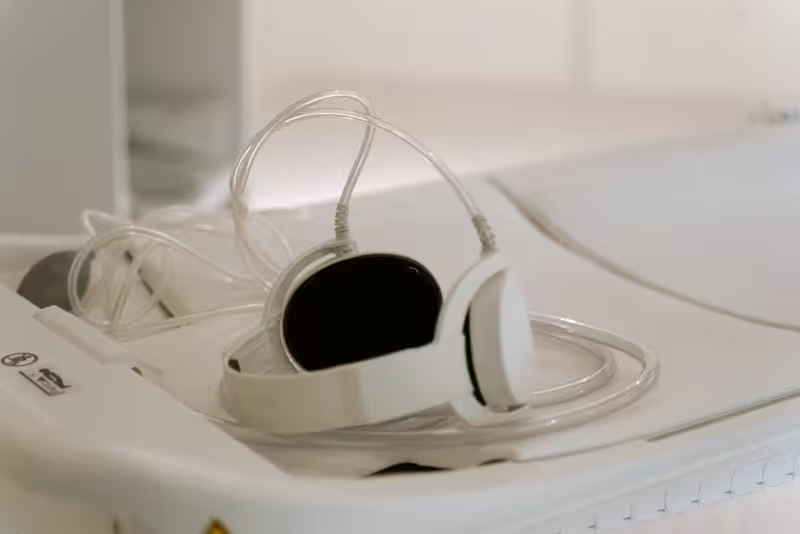
The Hearing First clinic in Oxford is positioned for people searching for ear wax removal near me, and patients travelling by car can use free on-site parking. Located in North Hinksey close to Botley and the A34, it is straightforward to reach from surrounding suburbs such as Summertown, Jericho and Cumnor. Registered Audiologists staff the premises and deliver clinical ear care services including microsuction, manual instrument clearance and hearing assessments. Visitors commonly report that clear parking, signage and a short walk to reception reduce pre-treatment anxiety, which can be important for people with limited mobility or procedural nerves. If you value punctual appointments, accessible parking and a clinical environment run by specialists, this location aims to combine convenience with professional ear care.
Practical Notes for Drivers
Allow additional time for parking and wheelchair access at busy periods, especially during commuting peaks. When using satnav, enter the clinic name and confirm the route in case of temporary roadworks or diversions on main approaches into Oxford.
Reasons to Choose an Audiologist-Led Ear Wax Service Nearby
Selecting an audiologist-led service means assessment and treatment are provided by clinicians trained in ear anatomy, otoscopy and safe wax removal techniques. Audiologists have specialist knowledge of hearing tests and the appropriate clearance method—be that microsuction or manual instruments—so treatment is tailored to each ear. This specialist approach lowers the chance of injury and allows immediate interpretation of unexpected findings such as infection, foreign bodies or tympanic membrane changes. Many patients prefer independent clinics not owned by hearing aid manufacturers because independence supports impartial guidance on whether amplification is necessary. Clinical expertise, diagnostic equipment and on-site parking combine to create an efficient, dignified pathway that respects confidentiality and clinical governance.
Professional Assurances and Credentials
Our clinicians hold recognised professional registrations, follow current infection control guidance and undertake ongoing training in microsuction and ear health. Clinical notes, consent records and aftercare advice are documented to help patients make informed decisions about hearing tests and any onward care.
Patient-Centred Decision Making
We communicate results plainly and offer balanced information about hearing aids, rehabilitation and monitoring so patients leave with practical next steps and realistic expectations.
Accessible Disabled Parking
Published Accessibility Features
- Wheelchair-accessible entrance
Accessibility details are provided by Google Maps. Contact the location to confirm individual requirements.
One disabled parking bay is located directly outside the clinic entrance.
Directions to Our Clinic
From the A34 Southern By-Pass Road northbound, take the Westminster Way exit, follow the road round to the right and then turn left onto Raleigh Park Road. At the top you will notice red-brick posts with bobbles marking Raleigh Park; continue a short distance and then turn right onto the narrow lane leading to Raleigh Park Clinic. The customer car park is a gravel area on the right just before the clinic.
From Botley, starting near the Premier Inn Oxford Botley, go south on Westminster Way for about half a mile then turn right into Raleigh Park Road. At the top you will see the red-brick posts indicating Raleigh Park; after a short distance turn right onto the narrow lane leading to Raleigh Park Clinic, where the customer car park is a gravel area on the right just before the building.
What Microsuction Is and Why Many People Prefer It
Microsuction is a mechanical ear wax removal technique that uses a small suction instrument and a microscope or fibre-optic camera to clear wax under direct vision. Clinicians can see the ear canal and eardrum while working, which reduces trauma risk and helps to minimise discomfort. Because microsuction does not involve flushing water into the ear canal, it is generally suitable for people with past perforations, grommets or a history of ear surgery. The procedure is usually quick, often completed within 20 to 40 minutes depending on impaction, and recovery is immediate since no fluid remains in the ear. Many patients find microsuction quieter and less messy than irrigation, and clinicians adapt the approach to individual anatomy.
Advantages of Microsuction
- It allows immediate assessment of the ear canal and eardrum after clearance, enabling clinicians to identify infection or other pathology that may need follow-up care.
- Direct visualisation permits precise removal of compacted wax while protecting the eardrum, lowering the chance of perforation or inadvertent canal abrasion during treatment.
- The method is suitable for children and adults and is generally well tolerated with minimal post-procedure care when performed by experienced clinicians.
- Microsuction is appropriate for people with grommets or healed perforations, where water-based irrigation would be unsafe.
- Some types of wax can be removed without prior softening drops, shortening the path to effective treatment for urgent symptomatic blockages.
Microsuction Compared with Ear Syringing
Many GP surgeries in Oxford no longer provide ear syringing. Reasons include restricted funding and safety concerns, as ear syringing is generally a less safe technique than microsuction. Potential complications of ear syringing or irrigation include ear infection, hearing deterioration, tinnitus, perforation of the eardrum, and further impaction where wax is pushed against the eardrum. It is therefore understandable that patients are increasingly choosing microsuction ear wax removal. Rising demand has also stretched NHS microsuction services, which can lead to waiting times of two to three months in some areas.
You do not have to wait months for microsuction. Consider private treatment to save time. To book, simply visit our booking page and you may be able to resolve your wax blockage within days.
27 Interesting Facts About Oxford
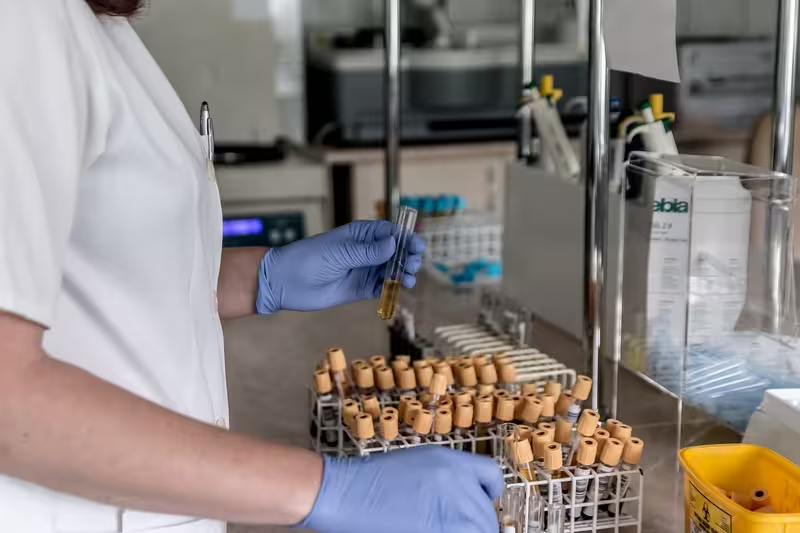
- The Ashmolean Museum: The Ashmolean Museum, founded in 1683, is the oldest public museum in the UK and houses a vast collection of art and archaeology.
- Oxford's Covered Market: Established in 1774, the Covered Market is a historic marketplace featuring a variety of independent shops and food vendors.
- The Oxford Canal: The Oxford Canal, completed in 1790, stretches 78 miles and connects Oxford to the River Thames at Thrupp.
- The University Parks: University Parks is a 70-acre park that serves as a recreational area for both students and the public, featuring beautiful gardens and sports facilities.
- The Sheldonian Theatre: Designed by Sir Christopher Wren, the Sheldonian Theatre was completed in 1669 and is used for university ceremonies and concerts.
- The Oxford Playhouse: The Oxford Playhouse, opened in 1938, is a renowned theatre that hosts a variety of performances, including drama, dance, and comedy.
- The Martyrs' Memorial: The Martyrs' Memorial, erected in 1843, commemorates the Oxford Martyrs who were executed for their Protestant beliefs in the 16th century.
- Christ Church Meadow: Christ Church Meadow offers scenic walking paths alongside the River Thames and is a popular spot for both locals and visitors.
- The Oxford Dictionary: The Oxford English Dictionary, first published in 1884, is widely regarded as the definitive record of the English language.
- The Radcliffe Observatory: Built in 1772, the Radcliffe Observatory was originally used for astronomical observations and is now part of the University of Oxford.
- Oldest University in the English-Speaking World
The University of Oxford was established in the 12th century and is the oldest university in the English-speaking world. - The Bridge of Sighs Curse
Students believe that walking under Hertford Bridge before exams brings bad luck — many cross the street to avoid it. - Ear Wax Removal In Oxford
Ear wax removal is available from the experts at Hearing First Oxford on Tuesdays at Raleigh Park Clinic in North Hinksey, Botley OX2 – easily accessible from the A34 Northbound or Premier Inn Oxford Botley with plenty of free onsite parking. Click here to book now. - City of Spires
Oxford’s skyline is famously dotted with church towers and college spires, inspiring the nickname “The City of Dreaming Spires”. - Shark on the Roof
A life-size fibreglass shark crashes through the roof of a house in Headington — installed in 1986 as a protest against war and censorship. - Oxford University Press
OUP is the largest university press in the world and has been publishing scholarly works since 1586. - The Ghost of the Sheldonian
Staff at the Sheldonian Theatre report hearing footsteps and creaking floorboards late at night, attributed to a spectral former caretaker. - Punting on the Cherwell
One of Oxford’s most iconic leisure activities, punting involves propelling a flat-bottomed boat along the river using a pole. - The Gargoyle That Sticks Its Tongue Out
On New College Lane, one gargoyle is pulling a face and sticking its tongue out — allegedly aimed at a rival college. - The Bodleian Library
One of the oldest libraries in Europe, the Bodleian has over 13 million printed items and receives a copy of every book published in the UK. - The Underground Narnia Door
Near St Mary’s Passage, there’s a small wooden door said to have inspired the magical wardrobe in C.S. Lewis’s Narnia series. - Radcliffe Camera
This iconic circular library building is one of Oxford’s most photographed landmarks and part of the Bodleian Library system. - The Morse Effect
After years of the TV show Inspector Morse, tourists frequently visit Oxford pubs just to sit where the fictional detective drank. - Blackwell’s Bookshop
Founded in 1879, Blackwell’s is home to the Norrington Room — one of the largest rooms of books in the world, located underground. - Oxford’s Miniature Forest
A micro-forest has been planted in Florence Park using the Miyawaki method to boost biodiversity in urban areas. - The Divinity School Ceiling
The intricate fan-vaulted ceiling of the Divinity School took three years to carve and features over 400 bosses. - The Cat That Earned a Degree
In the 1920s, a cat named Simpkins
What to Expect During Your Appointment: Step by Step
Research Catalogue Results for Ear Wax Removal
- The auricular cough reflex: lateralization, prevalence, procedural determinants, and the role of examiner handedness. - van de Loo J, Mayer M, Sharaf K, Eckel H, Jansen L, Klussmann JP, Luers JC., 2026.
- High-definition otoscopic device for humanitarian mission: how i do it. - Lechien JR, Maniaci A, Kipsang MJ, Kibor M, Vaira LA., 2025.
- Use of Castor Oil in Dermatology: A Narrative Review. - Girdler K, Cabatu A, Olds H, Potts GA., 2026.
Source: Europe PMC. These are bibliographic matches, not personalised medical advice or an endorsement of a treatment.
Your appointment typically begins with a short clinical history and symptom check where the clinician asks about ear pain, discharge, hearing change or past ear procedures. This is followed by visual inspection using an otoscope or microscope to confirm whether wax is the cause of symptoms. If wax is present, the audiologist will explain the preferred removal technique, obtain informed consent and proceed while checking your comfort throughout. After clearance, repeat otoscopy confirms the canal and eardrum status and the clinician will provide written aftercare advice or arrange referral if anything abnormal is found.
Typical Appointment Sequence
- Post-procedure inspection and a hearing check if required, with any referral to ENT or follow-up arranged as necessary.
- Arrival and registration, including a brief medical and medication review to identify contraindications relevant to ear treatment and hearing assessment.
- Visual ear inspection and documentation of findings to determine whether microsuction or instrument clearance is the safest option.
- Provision of aftercare guidance and advice on preventing recurrence, plus details of how to arrange follow-up if symptoms persist or worsen.
- Administration of the chosen procedure with patient feedback encouraged throughout, so the clinician can stop or alter technique in the event of pain or dizziness.
On-Site Parking Details
There is ample on-site parking available for patients attending the clinic.
Safe, Comfortable Ear Wax Removal
Ear and hearing care require expertise. While some providers assign ear wax removal to unregulated staff, we believe it should be performed by a trained Audiologist.
At our clinic qualified Audiologists carry out ear wax removal, bringing specialist understanding of ear anatomy and physiology to reduce the risk of harm and ensure effective, personalised treatment. Your hearing deserves professional care and we are committed to delivering high clinical standards.
Parking, Accessibility and Disabled Bays at the Clinic
The clinic has a gravel customer car park on site, with an identified disabled bay directly outside the building to minimise walking distance for patients with mobility needs. The approach to the entrance is level and the treatment rooms are on the ground floor, so there are no internal steps to navigate. Access ramps, handrails and clear pathways are maintained for people using wheelchairs, walking aids or pushchairs. Drivers should allow a few extra minutes during busy times to find the disabled bay; if preferred, notify reception in advance to help ensure a smooth arrival. Although lifts are not available, staff will assist with short transfers from vehicle to entrance when it is safe to do so.
Practical Accessibility Notes
A small number of close-access spaces are reserved for patients with mobility needs; these are intended for short-term use during appointments to prioritise access for those who most require it. If you need additional assistance, informing reception at booking helps us allocate the most appropriate space and staff support.
Using Public Transport or Dropping Off
For those arriving by bus or taxi there is a convenient drop-off point a short, step-free walk from the clinic entrance. Allow extra time at peak travel times when public transport may be delayed.
Tip for Blue Badge Holders
Bring your blue badge so staff can confirm eligibility for the disabled bay and, where possible, reserve the space nearest the entrance on arrival.
How Much Does Ear Wax Removal in Oxford Cost?
Published Payment Methods
- Credit cards
- Debit cards
- Contactless or NFC payments
Payment information may change. Confirm prices, insurance eligibility and accepted methods directly with the provider. Place attributes are provided by Google Maps.
Ear wax removal in Oxford starts at £34. Final pricing depends on whether one or both ears need treatment, the complexity of the case, the appointment time and how far ahead the booking is made.
Hearing Tests and Independent Hearing Aid Advice
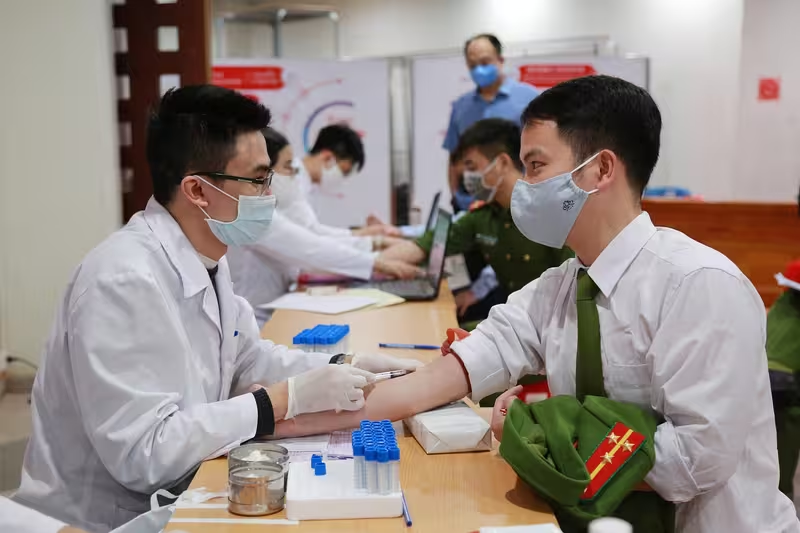
We provide diagnostic hearing assessments that measure tone thresholds and speech recognition and explain results in plain, practical terms. Our service is independent and not part-owned by any hearing aid manufacturer, so recommendations for amplification are based on clinical need and the patient’s everyday listening requirements. If hearing aids are suitable, we offer device selection, fitting, programming and structured aftercare with support for rechargeable models, Bluetooth connectivity and mobile phone compatibility. Every hearing aid consultation includes realistic counselling about expected benefit, trial periods and the role of rehabilitation in improving communication.
Our Approach to Hearing Rehabilitation
- We assess daily listening environments and communication needs to guide selection of hearing aids that balance discreet design, battery life and connectivity features for each individual.
- Fitting appointments include real-ear measurements and device programming so amplification is matched to your audiogram and personal preferences.
- We provide hands-on demonstrations of Bluetooth pairing, recharge routines and device maintenance to reduce the risk of device abandonment.
- Structured aftercare is available, with routine cleaning, filter replacement and software updates to maintain optimal device performance.
- When amplification is not appropriate we discuss alternatives such as communication strategies, assistive listening devices and referral to ENT for medical follow-up.
Ground Floor Disabled Access
The clinic is located on the ground floor.
Parking
There is ample on-site parking for patients at the clinic.
Our location offers free on-site parking to make visits straightforward and reduce stress about parking availability.
Care for Under-18S: Consent, Safety and Accompanying Adults
Microsuction ear wax removal is offered for young people aged 12 to 17 when accompanied by a parent or guardian, with a child-centred approach to ensure comfort and safety. Before any procedure we explain what will happen in age-appropriate terms and obtain informed consent from the accompanying adult plus assent from the young person when possible. The clinician screens for contraindications such as recent infection or prior ear surgery and discusses whether ear drops or an alternative technique is a better option for the child. Safeguarding policies are in place and staff are trained to recognise vulnerability so the welfare of younger patients is prioritised throughout the visit.
What Parents Should Expect at the Appointment
Bring any prior medical records, note if the child has anxiety about medical procedures, and allow extra time so the clinician can build rapport and explain each step before treatment starts.
Parents or guardians retain responsibility for consent and for supervising any post-treatment care such as temporary ear protection for swimming if the clinician advises it. If you are concerned about a child’s hearing or recurrent wax, a hearing check can be arranged alongside the wax removal appointment.
Services We Provide
- Manual Instrument Ear Wax Removal
- Under 18 Microsuction Ear Wax Removal: We provide microsuction ear wax removal for age 12-17 when accompanied by a parent or guardian.
- Microsuction Ear Wax Removal
- Impartial Hearing Aid Advice, Fitting and Aftercare: If you want friendly, impartial advice, we are an independent company that is not part-owned by a hearing aid manufacturer, so we can advise you on which model will be the most appropriate, given your unique lifestyle requirements. We supply and fit all the latest digital invisible, rechargeable, bluetooth and iPhone-compatible hearing aids.
- Hearing Tests: We can test your hearing and explain the meaning of your test results – We are not part-owned by a hearing aid manufacturer, so unlike some High Street chains, we won’t offer you a “free” hearing test and then push you to buy hearing aids.
Hearing First Oxford - Ear Wax Removal and Hearing Aids
Located within Raleigh Park Clinic,
Oxford OX2 9AR
Phone: 0800 133 7987
URL: https://www.hearingfirst.co.uk/book-ear-wax-removal-near-me/book-microsuction-ear-wax-removal-oxford/
View Hearing First Oxford - Ear Wax Removal and Hearing Aids on Google Maps.
Professional ear wax removal Oxford Audiologists. Conveniently located just off the A34 in the North Hinksey area of Botley, with free on-site parking. We are the only ear wax removal clinic in Oxford that offers The Hearing First Waxfree Guarantee™ , so if you have a blocked ear, book an appointment at our ear wax removal Oxford clinic. We really are the ear wax removal experts in Oxford!
Services We Offer
- Hearing Tests: We can test your hearing and explain the meaning of your test results – We are not part-owned by a hearing aid manufacturer, so unlike some High Street chains, we won’t offer you a “free” hearing test and then push you to buy hearing aids.
- Under 18 Microsuction Ear Wax Removal: We provide microsuction ear wax removal for age 12-17 when accompanied by a parent or guardian.
- Microsuction Ear Wax Removal
- Impartial Hearing Aid Advice, Fitting and Aftercare: If you want friendly, impartial advice, we are an independent company that is not part-owned by a hearing aid manufacturer, so we can advise you on which model will be the most appropriate, given your unique lifestyle requirements. We supply and fit all the latest digital invisible, rechargeable, bluetooth and iPhone-compatible hearing aids.
- Manual Instrument Ear Wax Removal
Our clinic focuses on comprehensive ear care, giving each patient a tailored plan. Whether you need microsuction or manual clearance, our Audiologists will assess your needs and provide impartial advice on hearing aids if required.
Pricing, Appointment Availability and NHS Versus Private Pathways
Private ear wax removal commonly offers shorter waits than NHS services, which can be important for those experiencing significant hearing loss or discomfort. Fees vary according to whether one or both ears need treatment, the complexity of the case and the appointment slot; up-to-date pricing is available on the clinic website or on enquiry. Private pathways generally allow direct access to microsuction without a GP referral, expediting diagnosis and treatment. For patients who prefer NHS care, clinicians can explain referral criteria and likely waiting times for hospital-based microsuction clinics.
Booking Considerations
We provide flexible appointment times including weekday slots and limited weekend availability for working patients. Cancellation terms are stated at booking; giving reasonable notice helps the clinic reallocate the appointment. For urgent symptomatic blockages we reserve some short-notice availability when possible, and reception can advise on the earliest suitable appointment.
Safe, Comfortable Ear Wax Removal by a Local Audiologist
Ear and hearing care requires specialist skills. Some providers delegate ear wax removal to lay staff, treating it as routine, but we consider it an audiological procedure that benefits from professional training.
Only qualified Audiologists at our clinic perform ear wax removal, offering specialist knowledge of ear anatomy and physiology to reduce harm and ensure an effective, personalised procedure. Your hearing is too important to leave to chance, and we aim to deliver consistently high standards of care.
How to Prepare for Your Appointment: Practical Pre-Visit Guidance
Preparing ahead of your ear wax appointment helps the clinician provide efficient, safe care and increases the chance of a comfortable result. If you have been using ear drops follow the advised schedule and bring the remaining bottle so the clinician can note what was used. Avoid inserting cotton buds or home tools before your visit, as these can push wax deeper and change the assessment. If you wear hearing aids bring them and any accessories so the clinician can advise on device cleaning after clearance and check for related issues affecting performance.
Suggested Items to Bring
- Carry any walking aids or a responsible adult if mobility assistance is needed, so they can help with transfers and parking from the disabled bay when required.
- Bring a list of current medications and known allergies, because this information supports safe clinical decisions and highlights conditions that might affect treatment choices.
- Bring your hearing aids and chargers, where applicable, so clinicians can assess device-related problems and offer maintenance guidance.
- Bring any previous audiograms or ENT letters if available, since historical records help clinicians understand long-term ear health trends.
- Consider wearing comfortable clothing and avoid ear jewellery on the day to make examination and procedure easier.
Driving Directions to Hearing First Oxford
- Woodstock Road Chemist - Travel Clinic, Weight Loss Clinic & Ear Wax Removal Clinic - Pharmacy to Hearing First Oxford: approximately 6.5 miles and 16 minutes by car. The route typically begins: Head north-west towards St Bernard's Rd; then Turn right onto St Bernard's Rd; then Turn left onto Woodstock Rd/A4144. Open this route in Google Maps.
- Earwax Clearing to Hearing First Oxford: approximately 4.4 miles and 10 minutes by car. The route typically begins: Head south-east on Rose Hill/A4158 towards Church Cowley Rd/B4495 Continue to follow A4158; then At Littlemore Roundabout, take the 3rd exit onto Eastern By-Pass Rd/A4142; then Slight right to stay on Eastern By-Pass Rd/A4142 Continue to follow Eastern By-Pass Rd. Open this route in Google Maps.
- St Bartholomews & Hollow Way Med Centre to Hearing First Oxford: approximately 5.4 miles and 18 minutes by car. The route typically begins: Head north-west; then Turn left towards Manzil Way; then Turn right onto Manzil Way. Open this route in Google Maps.
- The Story Museum to Hearing First Oxford: approximately 4.2 miles and 13 minutes by car. The route typically begins: Head east on Pembroke St towards St Aldate's/A420; then Turn right onto St Aldate's/A420; then Continue onto Abingdon Rd/Folly Brg/A4144 Continue to follow Abingdon Rd/A4144. Open this route in Google Maps.
Distances, indicative journey times and route links are provided by Google Maps. Check live conditions before travelling.
How to Find Our Clinic
From the A34 Southern By-Pass Road northbound exit at Westminster Way, follow the slip road round to the right and then turn left onto Raleigh Park Road. At the top you will notice red-brick posts with bobbles marking Raleigh Park; continue a short distance and then turn right onto the narrow road to Raleigh Park Clinic. The customer car park is a gravel area on the right just before the clinic.
From Botley, leaving from near the Premier Inn Oxford Botley, travel south on Westminster Way for about half a mile then turn right onto Raleigh Park Road. At the top, after the red-brick posts, continue a short way and turn right onto the narrow lane leading to Raleigh Park Clinic, where the customer car park sits on the right before the building.
Aftercare and Prevention: Keeping Ears Healthy After Removal
Aftercare aims to protect the ear canal and reduce the chance of rapid wax recurrence. Clinicians usually advise avoiding water ingress for a short time if the canal or eardrum appears inflamed, and may recommend specific ear drops or emollients where appropriate. Patients experiencing tinnitus or a temporary change in hearing receive clear guidance on what to watch for and when to seek further review. People who form wax repeatedly can arrange maintenance appointments, and clinicians provide education on safe earcare to discourage cotton bud use and other risky practices.
Common Aftercare Recommendations
- Use prescribed or recommended ear drops only as advised, following dosage and duration instructions to soften residual wax or treat inflammation.
- Keep water out of the ear for the period recommended by the clinician, especially when swimming or showering, to reduce the risk of otitis externa.
- Return for review if you experience pain, persistent discharge, sudden hearing loss or worsening tinnitus within a fortnight of treatment.
- For recurrent wax, arrange maintenance checks at intervals agreed with the clinician to prevent symptomatic blockages and reduce emergency visits.
- Avoid inserting cotton buds or ear candles into the ear canal, since these practices can damage the skin, push wax deeper or cause infection.
Further Information
For more details about our Oxford ear wax removal clinic, view this external information page.
Hearing First Oxford – Microsuction Ear Wax Removal Ox2 Map
Conditions Commonly Managed at Our Clinic
We commonly treat impacted ear wax, symptomatic blockages that reduce hearing, otitis externa when it is safe to manage locally, and provide follow-up for patients with a history of perforated eardrums or grommet insertion. Clinicians also screen for chronic skin conditions of the ear canal and can identify potential sensorineural changes that need onward referral for full audiological assessment. By addressing common causes of conductive hearing loss promptly, the service aims to restore hearing function where possible and advise on hearing protection in noisy settings. Early assessment helps prevent complications such as ongoing discomfort, recurrent infections or prolonged hearing impairment.
When We Will Refer On
Signs That Require ENT or Medical Input
We refer to ENT specialists if there is persistent bleeding, drainage suggesting infection, suspected cholesteatoma, or unexplained sensorineural hearing loss found during assessment, so patients receive the most appropriate specialist care without delay.
Note on Red Flag Symptoms
If You Experience Sudden, Unexplained Hearing Loss, Severe Vertigo or Facial Weakness, Seek Urgent Assessment via Emergency or ENT Services as These May Indicate Serious Conditions Requiring Immediate Investigation.
Nearby Bus Stops and Public Transport
Nearest Bus Stops to Hearing First Oxford
- Raleigh Park Road, approximately 0.1 miles from Hearing First Oxford. View this bus stop on Google Maps. Walking directions from Raleigh Park Road to Hearing First Oxford.
- Laburnum Road Shops, approximately 0.2 miles from Hearing First Oxford. View this bus stop on Google Maps. Walking directions from Laburnum Road Shops to Hearing First Oxford.
- Lime Road, approximately 0.2 miles from Hearing First Oxford. View this bus stop on Google Maps. Walking directions from Lime Road to Hearing First Oxford.
- Yarnells Hill, approximately 0.2 miles from Hearing First Oxford. View this bus stop on Google Maps. Walking directions from Yarnells Hill to Hearing First Oxford.
- Harcourt Hill Campus, approximately 0.3 miles from Hearing First Oxford. View this bus stop on Google Maps. Walking directions from Harcourt Hill Campus to Hearing First Oxford.
- Cedar Road, approximately 0.3 miles from Hearing First Oxford. View this bus stop on Google Maps. Walking directions from Cedar Road to Hearing First Oxford.
Nearest Rail, Tube and Tram Stations to Hearing First Oxford
- Oxford, approximately 1.1 miles from Hearing First Oxford. View this station on Google Maps. Walking directions from Oxford to Hearing First Oxford.
- Oxford Parkway, approximately 4.1 miles from Hearing First Oxford. View this station on Google Maps. Walking directions from Oxford Parkway to Hearing First Oxford.
- Radley, approximately 4.6 miles from Hearing First Oxford. View this station on Google Maps. Walking directions from Radley to Hearing First Oxford.
Stops and stations are ordered by straight-line distance from the destination using Google Places coordinates. Place and walking-direction links are provided by Google Maps.