Best Way To Head In The Direction Of Hearing First Cambridge
Guide Revised on 2026-08-07 08:38
Waxfree Guarantee™: Cambridge’s only clinic to promote the Waxfree Guarantee™ for ear wax removal.
We are the only specialist microsuction ear wax removal clinic in Cambridge offering both Microsuction Earwax Removal and Manual Instrument Earwax Removal delivered by our experienced Audiologists. Each earwax practitioner is personally selected by our founder, Jason Levy, so you can expect expert care. In short, we focus entirely on professional ear wax removal in Cambridge.
Mersham, Woodchurch, Chilmington Green, Great Chart, Hythe, Petham, Lenham, Tenterden, Biddenden, Dover and New Romney, also serves Willesborough Lees, Canterbury, Wye, Repton Manor, Smarden, Hothfield, Cheeseman’s Green, Hamswtreet, Smeeth, Charing, Hawkinge, Barham, Westwell, Shadoxhurst, Dymchurch, Eastwell, Brabourne Lees, Ram Lane, Hinxhill, Chilham, Elham, Kempe’s Corner, Challock, Singleton, Brook, Daniel’s Water, Lympne, other towns and villages in Kent., Godinton, Westwell, Kent, Bonnington, West Brabourne, Denton, South Willesborough, Aldington, Smarden, Sheldwich, High Halden, Leaveland, Bethersden, Maidstone, Beaver Green, Boughton Lees, Newtown, Folkestone, Kingsnorth, Wye, Kennington, The Forstal, Repton Park, Newington, as well as Our convenient location in Cambridge
Simple Routes to Hearing First in Cambridge
If you want the least stressful way to reach Hearing First Cambridge, start by choosing the route that suits your mobility, timing and comfort. For many people, a short walk from central Cambridge is the easiest option, especially if you are already in the city for work, study or another appointment. Others will find driving more practical, particularly if they need step-free access, free on-site disabled parking or prefer to avoid carrying on foot after a consultation. Public transport can also work well, provided you check live bus or rail times and allow for a short final walk. The best approach is often the one that reduces rushing, keeps the journey predictable and leaves you calm before seeing the audiologist. If you are attending for microsuction or manual ear wax removal, arriving with time to spare can help you settle in, complete quick checks and discuss any hearing symptoms or access needs with confidence.
Cambridge traffic, school-run pressure and commuter peaks can all change how long a short journey takes. That is why it helps to build in a small buffer, even when the clinic is only a few miles away. Comfortable shoes, a charged phone and a note of any medication or ear history will make the trip smoother. If you are unsure whether to walk, drive or use a train, think first about ease rather than speed alone, then choose the option that supports a safe and unhurried arrival.
Driving Directions to Hearing First Cambridge
- The Village Pharmacy - Microsuction Earwax Removal Service Cambridge to Hearing First Cambridge: approximately 4.5 miles and 16 minutes by car. The route typically begins: Head south-west on Church Ln towards High St; then Turn left onto School Ln; then Turn right onto Cambridge Rd. Open this route in Google Maps.
- Mill Road Surgery to Hearing First Cambridge: approximately 1.8 miles and 9 minutes by car. The route typically begins: Head west on Mill Rd towards Cyprus Rd; then Turn left onto Coleridge Rd; then Turn right onto Cherry Hinton Rd. Open this route in Google Maps.
- Nuffield Health, Cambridge Hospital to Hearing First Cambridge: approximately 1.0 mile and 8 minutes by car. The route typically begins: Head east; then Turn left towards Queensway; then Turn left onto Queensway. Open this route in Google Maps.
- Cannon's Green to Hearing First Cambridge: approximately 0.6 miles and 4 minutes by car. The route typically begins: Head north-east on Tenison Rd; then Turn right to stay on Tenison Rd; then Turn right onto Station Rd. Open this route in Google Maps.
Distances, indicative journey times and route links are provided by Google Maps. Check live conditions before travelling.
Choose the Travel Method That Suits Your Hearing Appointment
When Walking Is the Easiest Option
Walking can be the most direct way to reach a clinic in Cambridge when you are staying nearby or coming from the city centre. It avoids parking pressure, removes the risk of getting caught in local congestion and can be straightforward if you know the area well. A good walking route also gives you a predictable arrival time, which is useful when you have booked an audiology appointment for ear wax removal, hearing checks or follow-up care. Keep to well-lit streets, use proper crossings and give yourself enough time to follow signs without hurrying. If you are carrying hearing aids, paperwork or a small bag, it is worth keeping everything compact so that you are not distracted on the way.
Why Driving May Be Better for Some Visitors
Driving is often the more comfortable choice if you have reduced mobility, are travelling with someone else or want a direct drop-off close to the entrance. It can also suit patients who feel a bit tired after treatment and would rather avoid a lengthy return journey on foot or by bus. Free on-site disabled parking is a helpful advantage for people who need it, but it is still sensible to allow extra time in case nearby roads are busy. If you think your hearing might feel odd for a short period after treatment, plan ahead and decide whether you will drive back yourself or ask for a lift. A calm journey home is just as important as a calm arrival.
Practical Tip for a Smoother Start
Before you travel, confirm your booking time, any access requirements and whether you need to bring documents such as medication details. That small bit of preparation can save time at reception and reduce avoidable stress.
Useful Note for Anxious Patients
If you feel nervous about the appointment, choose the route that gives you the most control. For some people that means a quiet walk, for others it means a short taxi ride straight to the door.
Further Information and Resources
You can find more information about getting ear wax removal in Cambridge here.
Getting There from Cambridge Rail Station and Nearby Stops
Using the Station for a Straightforward Arrival
Cambridge rail station is one of the most useful arrival points if you are travelling from further afield or want to avoid city-centre parking. From there, you can walk, take a short taxi ride or use a local bus depending on how much time and energy you want to spend on the final stretch. A taxi is usually the simplest option if you are carrying luggage, using a mobility aid or attending when the weather is poor. Walking can also be reasonable if you prefer a fixed, door-to-door route through familiar streets and are happy to allow extra time for crossings and turnings. The key is to make the last part of the journey as predictable as possible, so you arrive relaxed rather than flustered.
Planning the Final Stretch on Foot
When walking from the station area, stay alert to traffic, cycle lanes and busier pavements, especially at commuter times. Cambridge can feel crowded in the morning and late afternoon, so a route that looks short on paper may still take longer than expected. If you are attending for microsuction or manual instrument wax removal, arriving a few minutes early gives the clinician space to complete safety checks and ask about your ear history. If you are not sure about the route, use a live navigation app on the day, but keep an eye on road conditions rather than relying on timing alone. A simple, direct journey is usually best for a healthcare visit.
Tip for Taxi Users
Tell the driver that you want the nearest sensible drop-off point to the clinic entrance, then check your surroundings before getting out so that you are not stepping into moving traffic.
Final Check Before Departure
If you are travelling by train, make sure your return ticket, hearing aid case and appointment details are easy to reach. That reduces faffing when you leave the station or clinic.
Driving, Parking and Clinic Accessibility
Car Parks Near Hearing First Cambridge
- Cambridge Hills Road, approximately 0.1 miles from Hearing First Cambridge. View on Google Maps.
- Parking Cambridge Junction Theatre, approximately 0.5 miles from Hearing First Cambridge. View on Google Maps.
- YourParkingSpace, approximately 0.5 miles from Hearing First Cambridge. View on Google Maps.
Parking information and place links are provided by Google Maps. Check restrictions and charges locally.
Published Accessibility Features
- Wheelchair-accessible entrance
- Wheelchair-accessible parking
Accessibility details are provided by Google Maps. Contact the location to confirm individual requirements.
Practical Driving Directions and Parking Notes
Driving to the Sun Lane clinic is convenient for many patients, especially if you expect to need easy access after microsuction or manual instrument removal. Free on-site disabled parking is available; please notify reception when you book so staff can advise on availability. Local roads can become congested at peak times, so where possible travel outside those windows. Allow extra time to find parking and be familiar with any resident permit zones close by. If you plan to drive afterwards, consider whether the procedure may briefly affect your hearing or balance and arrange a lift home if necessary. The clinic team can advise whether you ought to avoid driving immediately after treatment depending on your situation.
- If you are travelling from further afield and need longer-term parking, use the council or private car parks nearby which typically have clear pricing and longer stay options, then walk or take a short taxi ride to the clinic to ensure punctual arrival.
- On arrival, follow signs to the clinic forecourt and use the allocated patient spaces; if spaces are limited, reception will advise on the nearest public car park and provide a short walking route to the entrance, ensuring step-free access where available.
- For those requiring disabled bays, present any necessary permit or blue badge on arrival, and inform reception if assistance is needed from the car park to the clinic doorway, as staff may be able to offer help or an alternative drop-off point.
- Electric vehicle drivers should check for nearby charging points before setting off, as on-site charging may not be available; planning a route that includes a charge stop helps avoid range anxiety and keeps your journey smooth.
- Pay close attention to local restriction signs and resident-only bays to avoid fines; in areas adjacent to the clinic there can be timed restrictions that apply during weekdays and Saturday mornings, so plan parking duration accordingly.
Bus and Local Transport Options Near the Clinic
What to Check Before Boarding
Bus travel can be a practical and economical way to reach Hearing First Cambridge, particularly if you are travelling from within the city or from nearby neighbourhoods. Several stops sit within a short walk of the clinic, but service frequency changes across the week, so it pays to check the timetable on the day. Real-time updates are especially useful if you are attending an early slot or booking after work, because a delayed service can quickly make a short journey feel rushed. Low-floor vehicles, contactless payment and clear route information can all make the trip easier, especially for older patients or anyone with limited mobility. If your appointment matters to a wider hearing care plan, arriving composed and on time is worth the effort of checking the details beforehand.
Making the Last Walk Manageable
Even when the bus stop is close, the final walk may still involve crossing busy roads, stepping around other pedestrians or navigating uneven paving. Wear sensible footwear, keep your phone charged and leave a few minutes in reserve so you are not forced to hurry. If the weather is poor, a compact umbrella and a small, secure bag can help you keep documents dry and easy to access. For patients coming in for ear wax removal, it is also sensible to keep any hearing aids, batteries or relevant paperwork separate so they are not lost in transit. A tidy, uncomplicated journey tends to lead to a calmer consultation.
Accessibility Note
Before you travel, check whether the bus operator offers step-free boarding and space for mobility aids. Features vary, so it is better to confirm than to assume.
Small Planning Habit That Helps
Set one reminder for the bus time and another for your appointment time, so you can spot any delay early and decide whether to change route or travel method.
Preparing for Your Ear Wax Appointment at Hearing First
Paperwork, Medication Notes and Arrival Timing
Preparing ahead makes your appointment quicker and more comfortable. Bring any hearing or medical history, a list of current medications, and details of recent ear infections or symptoms. If you have had ear surgery, use hearing aids, or have a history of eardrum perforation, tell the audiologist when you book so they can plan the safest approach, whether that is microsuction or manual instrument removal. Arrive at least ten to fifteen minutes early to complete consent forms and discuss expectations with the clinician. If you expect to need help afterwards, ask a friend or family member to accompany you, because ear sensations can change briefly. The clinic follows standard safety checks to minimise complications and to choose the most suitable method for your ear anatomy and condition.
What to Bring and Practical Steps
- Wear or bring a face covering if you feel more comfortable doing so in a clinical setting, and follow any clinic guidance on infection control that may be in place at the time of your appointment.
- Bring any hearing aid batteries or ear moulds if they are relevant to your appointment, as the audiologist may need to check fit and function after wax removal to ensure the device performs correctly.
- Consider bringing a notepad or mobile device to record any aftercare instructions, because practical aftercare steps can influence hearing comfort and reduce the need for additional appointments.
- If you have allergy concerns, note them clearly on your paperwork and mention them to the audiologist, so any cleaning solutions or materials used during manual instrument removal can be avoided if necessary.
Quick Tip
If your ears are sensitive, avoid using cotton buds or ear candles before your appointment; these can push wax deeper and complicate removal, potentially lengthening the procedure or reducing its effectiveness.
Prepare Confidently for Your Ear Wax Appointment
A little preparation can make your appointment at Hearing First Cambridge more efficient and reassuring. Take relevant hearing and medical information, an accurate list of current medicines, and details of recent symptoms or ear infections. It is particularly important to flag previous ear surgery, a perforated eardrum or hearing aid use when booking, allowing the audiologist to consider whether microsuction or manual instrument ear wax removal is suitable.
Plan to arrive ten to fifteen minutes early so there is time to complete consent paperwork and discuss your expectations. Tell the clinician about allergies or sensitivities, including concerns about materials or cleaning products. If you feel anxious about the procedure or anticipate short-lived changes in ear sensation afterwards, bringing a friend or family member may provide useful practical reassurance.
- Bring hearing aid batteries, ear moulds or other relevant devices if the appointment may involve checking their fit after wax removal.
- Use a phone or notepad to record tailored aftercare advice from the audiologist.
- Follow any current clinic guidance on face coverings or infection-control measures.
- Explain any accessibility needs before travelling so that your arrival can be planned appropriately.
Avoid putting cotton buds or ear candles into your ears before your visit, as this may push wax further inward and make removal more difficult. Instead, leave the assessment to the trained audiologist, who can examine the situation and recommend the appropriate next step. Clear information and sensible preparation support a more personalised ear care experience from the outset.
Driving, Parking and Access Made Easier
What Drivers Should Know Before Setting Off
Driving to the clinic suits many patients because it offers flexibility, privacy and a direct route. It can be especially helpful if you are attending with a companion, have hearing aids or want the reassurance of door-to-door travel. Cambridge roads can become busy at peak times, so it is wise to leave a little earlier than you think you need. That gives you time to deal with junctions, temporary roadworks and the final approach without turning the trip into a rush. Free on-site disabled parking is useful for those who need it, but, as with any healthcare visit, a little forward planning helps. If your appointment involves microsuction or manual ear wax removal, you may prefer not to drive home immediately if you feel light-headed or uncertain about your hearing afterwards.
Parking and Access Considerations
Look out for local restrictions, permit bays and short-stay zones around the clinic area, because Cambridge can be strict on parking enforcement. If you have a Blue Badge, bring it with you and display it correctly. It is also sensible to check whether your chosen car park has step-free access from the bay to the pavement, as that can matter more than distance alone. A good parking choice should reduce stress, not add to it. If you are unsure about the best approach, contact the clinic before travel so you can plan around your mobility needs. This is particularly useful for patients with balance concerns, temporary hearing changes or anxiety about the procedure.
Practical Tip for Safer Departures
After treatment, pause for a moment before getting behind the wheel. Make sure you feel steady, can hear road noise comfortably and are happy to travel before you set off.
Useful Caution
If you are relying on sat nav, still watch for signs and parking rules locally, because technology can miss small access restrictions near a clinic entrance.
Services We Provide
- Manual Instrument Ear Wax Removal
- Microsuction Ear Wax Removal
Hearing First Cambridge
URL: https://www.hearingfirst.co.uk/book-ear-wax-removal-near-me/book-microsuction-ear-wax-removal-cambridge/
Professional ear wax removal Cambridge Audiologists. Our Cambridge clinic on Sun Lane is easily reached and offers free on-site disabled parking. We are the only ear wax removal clinic in Cambridge to provide The Hearing First Waxfree Guarantee™, so if you have a blocked ear, visit our ear wax removal Cambridge clinic. We truly are the ear wax removal experts in Cambridge.
Our Available Services
- Manual Instrument Ear Wax Removal
- Microsuction Ear Wax Removal
We offer two main approaches to ear wax removal so your care is matched to clinical need. Microsuction is often gentle and effective, while manual instrument removal suits other circumstances; both procedures are carried out by trained Audiologists with expertise in ear health.
Whether you have discomfort or you want routine maintenance, our team delivers professional service and attentive aftercare, making us a reliable choice in Cambridge.
How to Make Arrival Calm and Unhurried
Good Preparation Before You Leave Home
A calm arrival starts well before you reach the clinic. Put your appointment confirmation, medication list and any hearing notes somewhere easy to reach, then check your route once more before you leave. If you have had ear infections, surgery, perforation or other ear problems, mention them when you arrive, because that background helps the audiologist choose the safest method. Arriving early is rarely wasted time in a healthcare setting. It gives you a chance to settle, complete any checks and ask questions without feeling pressed. For people coming in for wax removal, a few spare minutes can also make it easier to switch off from the journey and focus on the appointment itself.
What to Bring with You
Keep your belongings simple. A small bag with keys, phone, paperwork, hearing aid case and medication details is usually enough. If you wear hearing aids, bring batteries or accessories if they may need checking after treatment. If you are anxious, it can help to travel with a friend or family member, not just for support but to help with directions, parking or the return trip. Many patients find that a short, well-planned visit feels much easier than one that is squeezed between other commitments. You are more likely to remember aftercare advice and less likely to feel flustered when you are not watching the clock.
- Check your appointment time the day before, then set a reminder for travel, parking and any train or bus connection you plan to use.
- Pack hearing-related items together, so you can hand over useful information quickly if the clinician asks about devices or previous care.
- Wear comfortable shoes and clothing, especially if you expect to walk from a station, stop or nearby car park.
- Leave extra time if you are travelling during school-run hours, lunchtime traffic or wet weather.
- Tell the clinic about accessibility needs in advance, so arrival support can be organised sensibly.
Tip for a Smoother Check-In
Have your phone volume turned up or use vibration alerts so you do not miss a call or message while travelling.
Final Reassurance
A little planning reduces uncertainty, which is often the biggest source of stress before an audiology visit. Calm travel usually leads to a better clinic experience.
Getting to Hearing First, Cambridge with Least Hassle
Route Summary at a Glance
Hearing First is based in a small clinic near Sun Lane, Cambridge. The quickest way to reach us varies with where you start and any mobility needs you have. From the city centre a straightforward walk along main streets is often simplest, while a short drive and use of the free on-site disabled parking can be much easier for those with limited mobility. Our registered audiologists provide microsuction and manual instrument ear wax removal, so arriving a little early gives you time to complete brief pre-appointment checks. If the clinic is busy there may be a short wait, and parking at peak times can take longer, so build in extra time. If you travel by bus, check timetables ahead and expect a few minutes’ walk from the nearest stop. Comfortable footwear makes walking between stops simpler, and bringing a brief list of medications and any hearing history can speed the check-in and help the audiologist prepare.
To make your visit smoother, book your preferred time in advance, note that microsuction is often recommended for stubborn wax, and confirm any access needs such as step-free entry when you book. Allow for traffic or local events, and consider bringing someone with you if you expect temporary hearing changes after the procedure, particularly if you will be using public transport or driving home.
Plan an Easy Arrival at Hearing First Cambridge
Choosing the simplest route to Hearing First Cambridge starts with your own travel needs. A central Cambridge walk can be a practical option when you are comfortable on foot, while travelling by car may be preferable if mobility, luggage or confidence after treatment are considerations. Allow a little contingency for traffic, busy pavements and finding the entrance, particularly around popular appointment times.
Arriving a few minutes before your ear wax removal appointment gives you time to settle in, complete the necessary checks and discuss any relevant hearing history with the audiologist. Bring an up-to-date medication list and mention previous ear concerns, such as infections, surgery or perforation, so the clinician can consider the most appropriate approach to microsuction or manual instrument removal.
- Book ahead and ask the clinic to confirm the best arrival guidance for your chosen time.
- Check bus times or live road conditions on the day, as local disruption can affect a short journey.
- Wear comfortable footwear if walking from the city centre or a nearby public transport stop.
- Contact the clinic before travelling if you need step-free access or other arrival support.
For patients with limited mobility, the available free on-site disabled parking may make driving the more comfortable choice. If you think treatment could leave your hearing feeling temporarily different, consider arranging company for the journey home. A well-planned arrival helps you focus on the reason for your visit, receiving attentive professional ear care.
Hearing Care Services You Can Expect on Arrival
Professional Ear Wax Removal from Trained Audiologists
When you arrive at Hearing First Cambridge, you are seeing a clinic focused on ear health and practical hearing support. The main procedures are microsuction and manual instrument ear wax removal, both delivered by qualified audiologists rather than non-clinical staff. That matters because the ear canal, eardrum and surrounding structures need careful assessment before any treatment begins. A trained clinician can decide whether your wax is suitable for removal, whether a different approach is needed and how to work around previous ear issues or hearing aid use. For many patients, that specialist attention brings peace of mind as well as physical relief. The aim is not just to remove wax, but to do so in a way that protects comfort and hearing function.
Why Method Matters
Microsuction is often chosen for stubborn wax because it allows the audiologist to see clearly while removing blockages with precision. Manual instrument removal may be more suitable in some cases, especially where the ear needs a gentler or more controlled approach. Neither technique should feel rushed. A proper consultation should include questions about symptoms, pain, infections, previous treatment and any history of perforation. If you have come from a short or long distance, it is still worth giving the same attention to detail, because safe care depends on the right method for the right ear.
The safest ear wax removal is the one chosen after a proper assessment, not the one that sounds quickest on paper.
That approach supports patient safety, cleaner hearing and more reliable aftercare. It also helps the clinician decide whether you might need a follow-up or whether the ears can be managed in a single visit. Good audiology is always tailored, not generic.
Driving Directions to Hearing First Cambridge
- The Village Pharmacy - Microsuction Earwax Removal Service Cambridge to Hearing First Cambridge: approximately 4.5 miles and 16 minutes by car. The route typically begins: Head south-west on Church Ln towards High St; then Turn left onto School Ln; then Turn right onto Cambridge Rd. Open this route in Google Maps.
- Cornford House Surgery to Hearing First Cambridge: approximately 1.5 miles and 8 minutes by car. The route typically begins: Head north on Wulfstan Way towards Cherry Hinton Rd; then Turn left onto Cherry Hinton Rd Go through 1 roundabout; then Turn right onto Hills Rd/A1307. Open this route in Google Maps.
- Brookfields Hospital to Hearing First Cambridge: approximately 2.0 miles and 11 minutes by car. The route typically begins: Head south; then Turn left; then Turn right towards Mill Rd. Open this route in Google Maps.
- Syd Barrett Birthplace to Hearing First Cambridge: approximately 0.3 miles and 3 minutes by car. The route typically begins: Head south-west on Glisson Rd towards Gresham Rd; then Turn right onto Hills Rd/A1307; then Turn right onto Cambridge Pl Destination will be on the left. Open this route in Google Maps.
Distances, indicative journey times and route links are provided by Google Maps. Check live conditions before travelling.
Public Transport Options and Typical Journey Times
Nearest Bus Stops to Hearing First Cambridge
- St Paul's Road, approximately 0.1 miles from Hearing First Cambridge. View this bus stop on Google Maps. Walking directions from St Paul's Road to Hearing First Cambridge.
- Hills Road, approximately 0.1 miles from Hearing First Cambridge. View this bus stop on Google Maps. Walking directions from Hills Road to Hearing First Cambridge.
- Catholic Church, approximately 0.2 miles from Hearing First Cambridge. View this bus stop on Google Maps. Walking directions from Catholic Church to Hearing First Cambridge.
- Gonville Place, approximately 0.2 miles from Hearing First Cambridge. View this bus stop on Google Maps. Walking directions from Gonville Place to Hearing First Cambridge.
- Botanic Gardens, approximately 0.2 miles from Hearing First Cambridge. View this bus stop on Google Maps. Walking directions from Botanic Gardens to Hearing First Cambridge.
- Downing College, approximately 0.3 miles from Hearing First Cambridge. View this bus stop on Google Maps. Walking directions from Downing College to Hearing First Cambridge.
Nearest Rail, Tube and Tram Stations to Hearing First Cambridge
- Cambridge, approximately 0.4 miles from Hearing First Cambridge. View this station on Google Maps. Walking directions from Cambridge to Hearing First Cambridge.
- Cambridge South, approximately 1.6 miles from Hearing First Cambridge. View this station on Google Maps. Walking directions from Cambridge South to Hearing First Cambridge.
- Cambridge North, approximately 2.2 miles from Hearing First Cambridge. View this station on Google Maps. Walking directions from Cambridge North to Hearing First Cambridge.
Stops and stations are ordered by straight-line distance from the destination using Google Places coordinates. Place and walking-direction links are provided by Google Maps.
Bus Routes, Frequency and Accessibility
Several bus routes stop within a short walk of the clinic on Sun Lane, though services differ by day and time so do check timetables on the day. Buses can be a cost-effective option and may run in priority lanes close to the city centre. Expect a modest walk from the nearest stop, and confirm whether your chosen service has real-time updates to avoid long waits. Many buses have step-free boarding and space for mobility devices, but features vary by operator, so check accessibility if you depend on it. Using contactless payment or buying a return ticket speeds boarding, and carrying a small bag for any paperwork you receive at the clinic is sensible. Evening and Sunday services tend to be less frequent, so align your booking with reliable service times to avoid lateness.
- When selecting a service, prioritise operators offering low-floor vehicles for easier boarding and space for pushchairs or mobility devices, ensuring a safer, more comfortable journey for patients with reduced mobility.
- Use real-time travel apps or operator websites to check live arrival times and any disruption notices on the day; this helps avoid unnecessary waiting near busy roads and ensures you arrive promptly for your appointment.
- Plan journeys outside school run hours where possible, as buses and pavements can be considerably busier, resulting in slower travel and longer waits between stops near the clinic.
- If you rely on subsidised concessionary travel, confirm the operator accepts the pass during the time of travel and carry identification to ensure ticketing staff can verify eligibility when required.
- Locate buses that serve Newmarket Road or nearby arterial roads; many have stops within a five to ten minute walk of the clinic, enabling a short onward walk to the entrance and reception area.
Use Public Transport for a Straightforward Clinic Visit
Public transport can provide a convenient way to reach Hearing First Cambridge without needing to navigate city-centre parking. Cambridge station is identified as the closest rail station, while several bus stops are within a short walking distance of the clinic. Check the latest operator timetable and journey updates before setting off, since routes, frequencies and disruption can vary by day and time.
For a more comfortable onward walk, choose the stop or station that best suits your mobility and the direction from which you are travelling. St Paul's Road and Hills Road are listed particularly close to the clinic, with Catholic Church, Gonville Place and Botanic Gardens also nearby. Leave enough time for crossings, changing weather and locating the entrance, especially when attending for ear wax removal.
- Use a live travel app on the day to review expected bus or train arrivals and service notices.
- Choose low-floor, step-free bus services where accessibility is important, and confirm features with the relevant operator.
- Keep appointment paperwork and any hearing aid items in a small, easy-to-carry bag.
- Allow extra time for evening, Sunday or peak-period journeys, when services and pavements may be busier.
Contactless payment can make boarding quicker, but passengers should confirm the ticket options that apply to their specific journey. If you use a mobility device or would value assistance at arrival, contact Hearing First in advance to discuss your requirements. Planning a reliable public transport route supports a calmer consultation with the audiologist and avoids unnecessary rushing before treatment.
What to Do If You Are Travelling with Limited Mobility
Keeping the Journey Comfortable and Practical
If you have limited mobility, the best way to head to Hearing First Cambridge is usually the route that reduces walking, stairs and uncertainty. Driving can be the most comfortable choice, especially if you can use accessible parking close to the clinic entrance. If you rely on public transport, it is worth checking for low-floor buses, step-free station access and the shortest possible walk from stop to door. Cambridge is busy and some pavements are narrow, so a route that looks convenient on a map may still be awkward in practice. The safest plan is often the one that minimises transfers and allows a steady pace, rather than the route with the fewest miles.
Support That Can Make a Difference
If you need help moving from car park to entrance, tell the clinic before you travel so the team can advise on the best access arrangements. Bringing a companion can make the trip easier too, particularly if you use a walking aid, tire quickly or are concerned about how you will feel after treatment. Keep any paperwork in an outer pocket or small pouch so you do not have to search for it at the door. It also helps to think about the return journey before you set off, because you may prefer a lift, a taxi or a direct bus rather than a long walk after the appointment. A little planning can turn a difficult trip into a manageable one.
Practical Tip
If you use a mobility aid, check the width of car park bays, pavement drop kerbs and door access before you travel, so you know what to expect on arrival.
Small but Useful Reminder
Do not assume the shortest route is the easiest. In Cambridge, the most comfortable route is often the one with the fewest obstacles.
Safe, Comfortable Ear Wax Removal from a Local Audiologist
Ears and hearing are sensitive, so treatment should be entrusted to skilled professionals. Some services hand ear wax removal to non-clinical staff, but we maintain that the procedure is best performed by a trained Audiologist.
Only qualified Audiologists perform ear wax removal at our clinic, ensuring a safe, effective procedure tailored to your individual needs. Our approach reduces the risk of harm because clinicians understand ear anatomy and function. We are committed to maintaining the highest standards of care for your hearing.
Hearing First Cambridge – Microsuction Ear Wax Removal Cambridge Cb2 Map
What to Expect After You Arrive at the Clinic
Research Catalogue Results for Ear Wax Removal
- The auricular cough reflex: lateralization, prevalence, procedural determinants, and the role of examiner handedness. - van de Loo J, Mayer M, Sharaf K, Eckel H, Jansen L, Klussmann JP, Luers JC., 2026.
- High-definition otoscopic device for humanitarian mission: how i do it. - Lechien JR, Maniaci A, Kipsang MJ, Kibor M, Vaira LA., 2025.
- Use of Castor Oil in Dermatology: A Narrative Review. - Girdler K, Cabatu A, Olds H, Potts GA., 2026.
Source: Europe PMC. These are bibliographic matches, not personalised medical advice or an endorsement of a treatment.
Settling in Before Your Appointment
Arriving a few minutes early is one of the simplest ways to make the visit smoother. It gives you space to find the entrance, speak to reception and settle after travelling, which is especially helpful if you have come through busy traffic or from a rail station. Once inside, you may be asked a few quick questions about symptoms, medications, infections or previous ear care. These details help the audiologist understand whether microsuction or manual instrument removal is the better option. If you have hearing aids, bring them with you and mention whether you have noticed changes in performance, because blocked wax often affects sound quality in ways patients do not always expect.
Questions Worth Asking at the Start
It can be useful to ask how the procedure will work, what you might hear during treatment and what aftercare advice you should follow once you leave. That is especially important if you are travelling home on your own, driving, or planning to use public transport soon after the appointment. If you are anxious, say so. A good clinician will explain the process in plain language and keep the pace sensible. The more clearly you communicate, the more confidently the appointment can be tailored to your needs. For many people, the real benefit of a local hearing clinic is not just convenience, but the reassurance of proper, attentive care.
- Keep your phone silent and easy to reach, so you can stay present during check-in and treatment.
- Share any pain, dizziness or sudden hearing changes straight away, as these details matter clinically.
- Ask for aftercare guidance in writing if you are likely to forget instructions once you leave.
- Let staff know if you need extra time moving from reception to the treatment room.
- Take a moment to check you feel steady before you begin your return journey.
That final pause can make the rest of the day feel much more manageable.
What Does Ear Wax Removal in Cambridge Cost?
Published Payment Methods
- Credit cards
- Debit cards
- Contactless or NFC payments
Payment information may change. Confirm prices, insurance eligibility and accepted methods directly with the provider. Place attributes are provided by Google Maps.
Ear wax removal in Cambridge starts at £34. Prices vary according to whether one or both ears are treated, how far in advance the booking is made, and whether you choose a peak or off-peak slot.
29 Interesting Facts About Cambridge
- Home to the Second-Oldest University in the English-Speaking World
writers, world leaders — and remains one of the most prestigious institutions globally., Founded in 1209, the University of Cambridge has educated monarchs, and scientists - Over 100 Libraries Belong to the University
Cambridge University has more than 100 libraries, including the iconic University Library, which houses over 8 million books and receives a copy of every UK publication. - Eight Prime Ministers Studied Here
Britain’s first official PM, including Sir Robert Walpole, Cambridge has educated eight British Prime Ministers, and more recently Stanley Baldwin and Neville Chamberlain. - The Best Ear Wax Removal In Cambridge
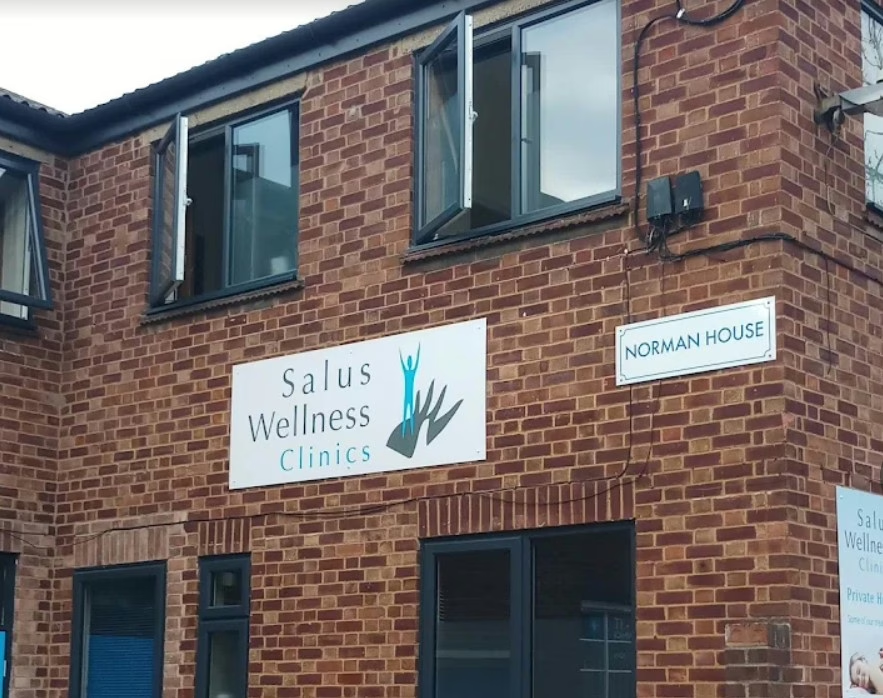
The UK’s premier ear wax removal and Audiology service, Hearing First, is available at Salus Wellness on Cambridge Place, just off Hills Road. You can click here to book an ear wax removal appointment in Cambridge with Hearing First. - Stephen Hawking Worked and Lived in Cambridge
The world-renowned physicist lived in Cambridge for most of his academic life and was Director of Research at the Centre for Theoretical Cosmology until his death in 2018. - The Rules of Football Were Codified Here
The Cambridge Rules, created in 1848, were an early attempt to standardise football and helped shape the modern game we know today. - Punting on the River Cam is a Local Tradition
Punting — pushing a flat-bottomed boat along the river using a pole — is one of Cambridge’s most iconic activities, particularly along the stretch known as The Backs, behind the colleges. - Cambridge Has Over 30 Colleges
each with its own history, St John’s, and famous alumni. King’s, traditions, The University is made up of 31 autonomous colleges, and Trinity are among the most recognisable. - Home to the Cavendish Laboratory
The Cavendish Laboratory, founded in 1874, is where many groundbreaking scientific discoveries occurred — including the structure of DNA by Watson and Crick in 1953. - First Computer Programmers Studied Here
studied at King’s College, father of computer science, Cambridge played a major role in early computing. Alan Turing, and the university remains a leader in AI research today. - Birthplace of the Hovercraft
Inventor Christopher Cockerell, who developed the hovercraft, was educated at Cambridge and conducted some of his early tests using a vacuum cleaner and kitchen scales. - Isaac Newton Studied and Taught at Trinity College
One of the greatest scientific minds in history, Sir Isaac Newton, formulated his laws of motion and gravity during his time in Cambridge, under the famous apple tree story. - Over 90 Nobel Prizes Have Been Awarded to Cambridge Affiliates
Cambridge University boasts over 90 Nobel Laureates across disciplines including literature, physics, medicine, and peace — more than any other university outside the US. - The Mathematical Bridge Has No Nails (Kind Of)
The Queen’s College Mathematical Bridge is a wooden structure famous for being held together by precision engineering — although modern nails have since been added during repairs. - Cambridge Has a Rich Literary History
Zadie Smith, A.A. Milne studied here. Lord Byron also famously kept a pet bear while at Trinity College because dogs, and Writers like Sylvia Plath were not allowed. - The Corpus Clock Tells Time — and Eats It
Installed in 2008, the Corpus Clock is a bizarre and beautiful creation featuring a metal “Chronophage” (time-eater) insect devouring time as it ticks. It’s both mechanical marvel and artistic metaphor. - Trinity College Owns Newton’s Apple Tree Clone
A tree grown from a cutting of Isaac Newton’s original apple tree stands in Trinity’s gardens — a living tribute to the moment that changed science forever. - Cambridge Is a Cycling Capital
Over a quarter of Cambridge residents cycle to work or school, giving it one of the highest cycling rates in the UK — and making bicycles a central part of its cityscape. - The First Colour Photo Was Developed Here
James Clerk Maxwell, who developed the first durable colour photograph, conducted part of his ground-breaking research in Cambridge in the 1860s. - Home to a Real-World Hogwarts-Style Dining Hall
especially at Christ’s and Trinity, resemble those in *Harry Potter* — with long wooden tables, portraits lining the walls., candelabras, and Many Cambridge college dining halls - The University Has No Central Campus
Cambridge is spread throughout the city. Its colleges, libraries, departments, student housing, and Unlike most universities are intertwined with the rest of Cambridge life.