Hearing First Ashford - Everything You Need To Know
This Resource Refreshed on 31 July 2026 17:40
Waxfree Guarantee™: We are the only ear wax removal clinic in Ashford to provide the Waxfree Guarantee™.
We are the only specialist microsuction ear wax removal clinic in Ashford, offering Microsuction Earwax Removal and Manual Instrument Earwax Removal delivered by our experienced Audiologists. Every earwax removal practitioner is selected personally by our founder, Jason Levy. Simply put, we are the ear wax removal specialists serving Ashford.
We welcome people from Maidstone, Hothfield, Wye, Mersham, Westwell, Brook, Dover and New Romney, Elham, Leaveland, Hinxhill, Chilmington Green, Beaver Green, Repton Park, Hythe, Biddenden, Folkestone, Godinton, Our convenient location in Ashford, Barham, Kennington, Smarden, Newington, Charing, Daniel’s Water, The Forstal, Eastwell, Bethersden, Lympne, Smarden, Great Chart, Repton Manor, Tenterden, Ram Lane, Shadoxhurst, Petham, Chilham, Brabourne Lees, Smeeth, Cheeseman’s Green, Kent, Canterbury, other towns and villages in Kent., Kempe’s Corner, Denton, Hamswtreet, Westwell, Challock, Wye, South Willesborough, Hawkinge, Woodchurch, Dymchurch, Newtown, Aldington, High Halden, Singleton, Bonnington, also serves Willesborough Lees, West Brabourne, Boughton Lees, Sheldwich, Kingsnorth, as well as Lenham. If you live nearby and have a blocked ear, our Ashford clinic is a local option for assessment and treatment.
Comprehensive Guide to Ear Care and Services Available at Hearing First in Ashford

Hearing First in Ashford provides focused ear care that prioritises safety and effective wax management, with care delivered by qualified audiologists. We use evidence-informed techniques such as microsuction and manual instrument removal to manage cerumen and related problems. Our clinicians explain each procedure, inspect the ear with otoscopy, and tailor treatment to reduce the risk of complications. Patients appreciate clear information on potential sensations, risks, and likely outcomes; we record findings and give personalised aftercare. This section outlines the clinic approach, the common interventions used, and why one method may be preferred over another, while keeping dignity and infection control at the centre of care.
Core Services and Clinical Approach
Our services include diagnostic otoscopy, targeted wax removal, and onward referral for formal hearing assessment when clinically appropriate. Audiologists choose the safest removal technique after considering ear anatomy, canal shape, any perforations or previous ear surgery, and the patient’s history. Patient preference and past wax management attempts are factored in. The clinical aim is to use the least invasive method that achieves effective clearance, restoring hearing and easing discomfort without relying on risky home remedies or unnecessary irrigation.
- Diagnostic otoscopy and documentation, recording canal appearance and tympanic membrane status, with photographic or written notes to guide treatment and any onward referral.
- Microsuction performed by a registered audiologist, using binocular vision and suction techniques, intended to provide precise, safe removal with minimal discomfort and improved visibility of the tympanic membrane.
- Aftercare advice and follow-up planning, including signs of infection, recommendations for ear hygiene, and options for repeat maintenance care if wax tends to recur.
- Manual instrument removal where appropriate, using specialised curettes and hooks under direct visualisation, chosen for certain types of impacted cerumen and when microsuction is not suitable.
- Risk assessment for conditions such as perforation, discharge, or recurrent impaction, ensuring collaborative care with GPs or ENT when required to protect hearing health and patient safety.
Further Information
You can read more about local options for ear wax removal in Ashford on this page.
Understanding the Different Ear Wax Removal Methods
The most suitable removal technique depends on the wax consistency, the shape of the ear canal, how well the patient tolerates procedures, and overall clinical safety. The two main approaches are microsuction and manual instrument removal, each with particular indications. Microsuction uses a fine suction probe under magnified vision to lift and remove fragments and debris, often preferred for its precision and minimal moisture. Manual instrument removal employs curettes or hooks for firm, adherent plugs where a grasping tool is more effective. Audiologists always assess risks such as recent surgery, prior perforation, or active infection before making a recommendation. The shared objective is to relieve blockage, restore hearing, and avoid damage to the canal and eardrum.
When Each Method Is Recommended
Microsuction is commonly used for softer or flaky wax, narrow canals, and for hearing aid users because it reduces the chance of pushing wax further into the ear. Manual extraction may be selected for hard, adherent plugs where an instrument can better engage the material. Clinical judgement balances patient comfort, any inflammation present, and prior responses to treatment when deciding the method.
Step-By-Step Expectations During Treatment
- After clearance, the clinician inspects the ear for residual wax, signs of infection, or perforation, provides aftercare instructions, and records the procedure for your ongoing hearing record.
- Initial assessment by a registered audiologist includes otoscopy, medical history review, and discussion of previous ear problems; this ensures the chosen method is safe and appropriate for the individual.
- Both methods may require pauses to reassess visibility, clear debris, or offer comfort breaks; practitioners will explain sensations you might feel and invite feedback at each stage.
- If microsuction is used, you will be seated with good head support while the audiologist uses magnification and suction to remove wax, taking care to avoid contact with the tympanic membrane.
- During manual removal, the clinician will steady the head and use a sterile instrument under direct vision, proceeding incrementally to avoid canal abrasion and to maintain patient comfort throughout the procedure.
Clinician Qualifications and Equipment
Treatments are carried out by trained audiologists using medical-grade microscopes, single-use suction tips, and sterilised instruments to meet infection control standards; these measures reduce cross-contamination risk and help ensure consistent quality of care.
Patient Safety Protocols
Before any intervention clinics follow a safety checklist, including obtaining consent, checking for allergies, and confirming medical history, so procedures proceed only when clinically safe and appropriate.
How Much Does Ear Wax Removal in Ashford Cost?
Published Payment Methods
- Credit cards
- Debit cards
- Contactless or NFC payments
Payment information may change. Confirm prices, insurance eligibility and accepted methods directly with the provider. Place attributes are provided by Google Maps.
At peak and off-peak times, ear wax removal in Ashford starts at £34. Prices may vary depending on whether one or both ears are treated and how far in advance the booking is made; please check with the clinic for the exact fee when you book.
30 Interesting Facts About Ashford
- The Ashford War Memorial: Unveiled in 1921, the Ashford War Memorial commemorates local soldiers who lost their lives in both World Wars and serves as a poignant reminder of the town's history.
- The Kentish Railway Museum: Located in Ashford, this museum preserves the history of the railway in Kent, featuring exhibits on local railway engineering and the impact of the railways on the region's development.
- Ashford's Historic Windmill: The Old Mill in Ashford, built in 1814, is a striking example of a traditional Kentish windmill and is a popular landmark for visitors exploring the town.
- The Ashford Community Theatre: Founded in 1979, the Ashford Community Theatre provides a platform for local talent, staging a variety of performances that engage the community in the arts.
- The Great Stour River Runs Through Ashford: The Great Stour River flows through Ashford, providing scenic walking paths and contributing to the town's natural beauty and biodiversity.
- The Ashford Historical Society: Founded in 1975, the Ashford Historical Society works to preserve the town's history through research, publications, and community events.
- The Ashford Music Festival: This festival showcases local musicians and bands, providing a platform for emerging talent and celebrating the town's musical heritage.
- The Ashford Green Corridor: A designated green space, the Ashford Green Corridor promotes biodiversity and provides residents with recreational opportunities in a natural setting.
- The Ashford Farmers' Market: Held weekly, the Ashford Farmers' Market features local produce and artisanal goods, supporting local farmers and businesses while fostering community connections.
- One of the Fastest-Growing Towns in the South East
Ashford has experienced dramatic growth over the past two decades due to strategic investment in housing, retail, and transport. Its location on major rail and road routes makes it ideal for commuters and businesses alike, driving ongoing expansion and regeneration. - Home to the Ashford Designer Outlet
The Ashford Designer Outlet is a major shopping destination in the region, designed by world-renowned architect Lord Richard Rogers. It offers discounts on over 100 high-end brands and underwent a £90 million expansion in 2019, further boosting its appeal to domestic and international visitors. - Ear Wax Removal In Ashford
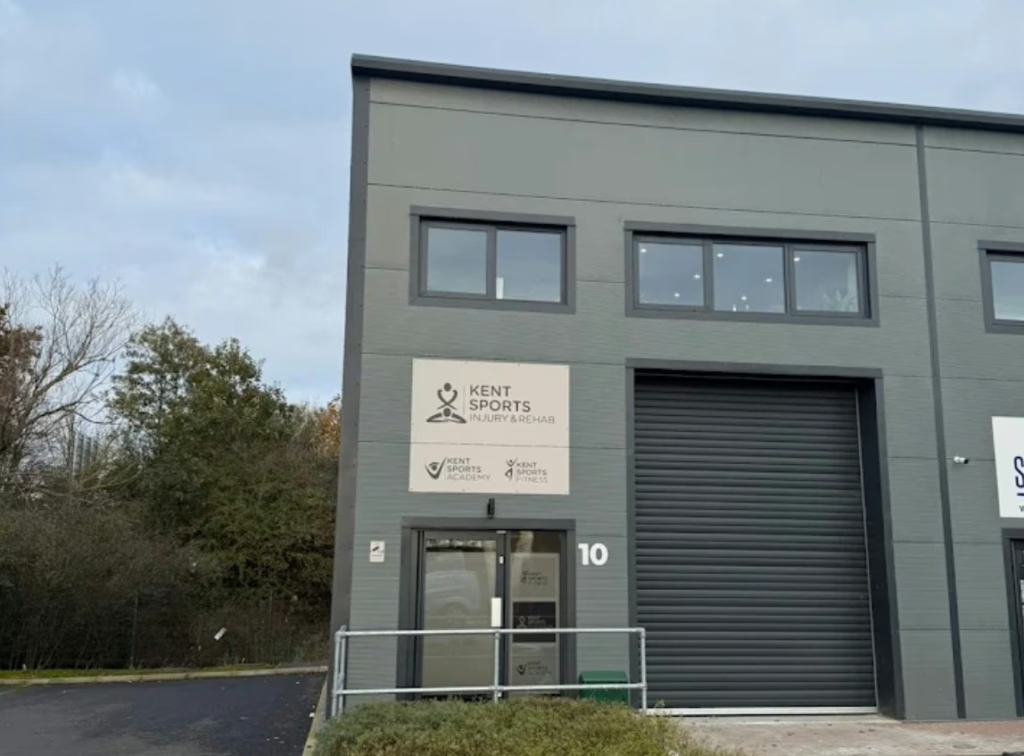
The UK’s premier ear wax removal and Audiology service, Hearing First, is available at Kent Sports Academy, just off the M20. You can click here to book an ear wax removal appointment in Ashford with Hearing First. - Ashford International Station Connects to Europe
Opened in 1996, Ashford International allows passengers to travel to mainland Europe via the Eurostar. Though direct Eurostar services were paused in 2020, the station remains fully equipped for international departures and plays a key role in regional and national travel networks. - Strategic Roman Roots
Though the town’s name is Saxon in origin, Ashford lies near Roman roads and settlements, suggesting it has long been a strategically important location. Archaeological finds indicate Roman activity in the area, linking it to broader networks of trade and communication in Roman Britain. - Ashford Was a Market Town Since the Middle Ages
The town has held markets since at least the 13th century. Ashford’s early economy was based on agriculture and livestock, with sheep fairs and markets helping to establish it as a rural commercial hub during medieval and early modern times. - St Mary’s Church is Over 800 Years Old
This Grade I listed church dominates the town centre with its 120-foot tower. Dating back to the 13th century, St Mary’s has been a place of worship for centuries and is now also used as a venue for concerts and cultural events, blending heritage and community use. - Once a Key Railway Town
In the 19th and 20th centuries, Ashford was an important railway engineering hub. The South Eastern Railway’s locomotive works, opened in 1847, employed thousands and helped shape the town’s industrial identity. Today, traces of that era are preserved in buildings and street names. - Victoria Park Features Rare Trees and Historic Structures
Victoria Park is a major green space in Ashford, picnics, community events., making it a beloved spot for relaxation, and many rare tree species, and originally laid out in the 19th century. It features a Grade II listed fountain gifted by George Harper in 1912 - Ashford is Known for Its Public Art
The town has embraced public art through installations like the “Barcode” car park and the “Treatise on the Art of Conversation” wall mural. These pieces reflect the town’s evolving identity, blending contemporary creativity with urban development. - The Curious Tale of the Tank Memorial
A WWI tank was gifted to Ashford in 1919 as a war trophy and placed in the town’s recreation ground. It remained on display for years but was eventually removed and scrapped — though it’s still fondly remembered by older generations and local historians. - Godinton House and Gardens is a Hidden Gem
a beautifully preserved Jacobean mansion with formal gardens and a rich history. It hosts open days, art events, sculpture trails, and Just outside the town centre lies Godinton House, offering a glimpse into upper-class country life across the centuries. - Home to the UK’s First Commercial Wind Farm
Little Cheyne Court, near Ashford, was one of the first operational wind farms in southern England, symbolising the area’s role in the transition to renewable energy. It provides clean power to thousands of homes and is part of a broader sustainability focus. - The Curious Spire of Christ Church South Ashford
This Victorian church, built in the mid-19th century, has a distinctive needle-like spire visible from many parts of Ashford. Its unique design is an architectural curiosity and has become a subtle landmark in the local skyline. - Home of the Ashford Snowdog
In 2018, Ashford took part in the “Snowdogs Discover Ashford” trail, featuring large, decorated dog sculptures across the town. The event raised funds for charity and brought thousands of visitors, highlighting Ashford’s community spirit and creativity. - Named in the Domesday Book
Ashford appears as “Essetesford” in the Domesday Book of 1086. At the time, it was a small settlement of around 20 households, but it already had a church and a mill, demonstrating its early significance in the region. - Has a Twinning Agreement with Several Towns
Ashford is twinned with towns including Fougères (France), Bad Münstereifel (Germany), and Hope (Canada), fostering international cultural exchanges and student partnerships that help promote global understanding and local pride. - A Thriving Creative Scene
various co-working spaces, a number of independent makers and artists. The town actively encourages local creativity through public funding and urban renewal schemes that prioritise arts and culture., and Ashford is home to Creative Folkestone’s satellite projects - Ashford College Offers Modern Education
the creative arts. It plays a vital role in regional skills development and employment growth., The new Ashford College campus, provides state-of-the-art facilities for learners of all ages, construction, opened in 2017, and with a strong emphasis on STEM - The Town Has a Long Brewing Tradition
In the 18th and 19th centuries, Ashford was home to several independent breweries. Today, the legacy continues through craft beer companies and microbreweries that carry forward the town’s passion for quality local brewing and pub culture. - Part of the Garden of England
exploring rural heritage., hop gardens, Situated in the heart of Kent, Ashford is surrounded by orchards, cycling, making it ideal for walking, and and farmland. It provides access to some of the most picturesque countryside in southeast England
How to Prepare for Your Appointment at the Ashford Clinic
Preparing ahead helps the clinician work efficiently, reduces appointment time, and increases the chance of a successful outcome. Bring any relevant medical information, for example a history of ear surgery, chronic ear discharge, or anticoagulant use, because these details influence the technique offered. Avoid inserting cotton buds, ear candles, or other objects in the days before your visit, since this can compact wax and complicate removal. If you use hearing aids, bring them or note the model, as device use can contribute to wax build-up and aftercare advice may differ. Consider arranging transport if you think you may be drowsy afterwards or if recommended by the clinician.
Practical Things to Do Before You Attend
- Allow additional time for older relatives or patients with mobility needs, as careful assessment and safe positioning can require more time than a standard appointment slot.
- Prepare questions about aftercare, recurrence risk, and whether routine maintenance appointments are advisable, so you leave with a clear plan for ongoing ear health management.
- Check your medication list and bring details of any anticoagulants or immunosuppressants, since these influence the clinical risk assessment and may affect whether certain techniques are offered.
- Wear comfortable, loose collars or low-neck clothing to allow good access and comfortable positioning during the procedure, which helps the audiologist maintain a steady view of the ear canal.
- Do not use ear drops unless instructed by a clinician, as unsupervised drops can alter wax consistency and sometimes worsen impaction, complicating removal efforts.
Safe, Comfortable Ear Wax Removal with an Audiologist in Your Local Area
Ears and hearing are delicate, so care should be entrusted to experienced clinicians. Some providers delegate ear wax removal to non-clinical staff and treat it as routine. We hold the view that this procedure benefits from the knowledge and skills of a trained Audiologist.
At our Ashford clinic, only qualified Audiologists perform ear wax removal using safe, effective techniques tailored to the individual. Your hearing deserves specialist attention grounded in an understanding of ear anatomy and physiology, which reduces the risk of harm and advances the standard of care we deliver.
Hearing First Ashford – Microsuction Ear Wax Removal Ashford Tn34 Map
What to Expect During Microsuction and Manual Instrument Removal
Research Catalogue Results for Ear Wax Removal
- The auricular cough reflex: lateralization, prevalence, procedural determinants, and the role of examiner handedness. - van de Loo J, Mayer M, Sharaf K, Eckel H, Jansen L, Klussmann JP, Luers JC., 2026.
- High-definition otoscopic device for humanitarian mission: how i do it. - Lechien JR, Maniaci A, Kipsang MJ, Kibor M, Vaira LA., 2025.
- Use of Castor Oil in Dermatology: A Narrative Review. - Girdler K, Cabatu A, Olds H, Potts GA., 2026.
Source: Europe PMC. These are bibliographic matches, not personalised medical advice or an endorsement of a treatment.
Throughout either procedure the clinician will keep you informed, comfortable, and safe. Microsuction commonly produces a faint vibration or noise as the probe clears debris, but it is generally quick and well tolerated. Manual instrument removal can feel more mechanical, with brief pressure as a curette engages a plug. Both approaches are performed under magnified direct vision to protect the skin of the canal and the eardrum. The audiologist will pause whenever you report discomfort, offering reassurance throughout. Typical appointments last between ten and thirty minutes, depending on how extensive the impaction is and whether both ears need treatment.
Common Sensations and Aftercare Expectations
Many people notice immediate improvement in hearing, a resolving sensation of fullness, and occasionally short-lived tinnitus as auditory balance returns; persistent pain or any discharge should prompt an urgent clinical review.
After treatment clinicians give tailored aftercare instructions, for example keeping ears dry for a short time, avoiding invasive cleaning, and arranging follow-up if symptoms recur. Audiologists can advise on ways to reduce future build-up, including scheduled maintenance and clinically appropriate ear drops where indicated. The overall aim is to restore function while reducing the chance of recurrence using conservative, evidence-based care.
Services We Offer
- Manual Instrument Ear Wax Removal
- Microsuction Ear Wax Removal
Hearing First Ashford - Microsuction Ear Wax Removal Network
URL: https://www.hearingfirst.co.uk/book-ear-wax-removal-near-me/book-microsuction-ear-wax-removal-ashford/
View Hearing First Ashford - Microsuction Ear Wax Removal Network on Google Maps.
Professional ear wax removal Ashford Audiologists. We are conveniently based in the Ashford Clinic on Sun Lane, with free on-site disabled parking. We are the only ear wax removal clinic in Ashford that offer The Hearing First Waxfree Guarantee™, so if you have a blocked ear please visit our ear wax removal Ashford clinic. We truly are the ear wax removal experts in Ashford.
Safety Standards, Clinician Qualifications and Professional Governance
Patient safety is at the heart of ear care at Hearing First in Ashford. Audiologists who perform ear wax removal are registered professionals with specific training in microsuction and manual techniques, supported by local clinical governance and continuing professional development. They follow national infection control guidance, maintain competency through supervised practice and audits, and participate in peer review. Clinics keep detailed records of procedures, outcomes, and any adverse events, which supports transparency and ongoing improvement. This governance framework helps maintain patient confidence and aligns with best practice for otological care.
What Qualifications and Checks to Expect
You should expect confirmation that the clinician is a registered audiologist or other qualified healthcare professional with documented training in ear wax removal. Clinics should be able to explain sterilisation processes, the use of single-use suction tips, and policies for managing complications, including referral pathways to ENT services for more complex cases. Consent is obtained and recorded so you understand the intended benefits, alternatives, and potential risks.
Aftercare and Recognising Complications
Aftercare commonly involves temporary avoidance of water entering the ear, watching for persistent pain, bleeding, or discharge, and arranging a follow-up if hearing does not improve. If signs of infection develop, prompt review is important to prevent deterioration and to consider topical or systemic treatment where clinically indicated.
Micro-Guideline for Recurrent Wax
For those who have frequent impaction, clinicians may suggest periodic professional reviews, gentle drying after showers, and avoiding cotton buds; some patients benefit from planned maintenance appointments to protect hearing aid performance.